








There are moments in a nation’s life when a single ceremony feels like a hinge—quiet to the ear, but heavy with movement. The swearing-in of Mrs D’Asante Hermia Small as the newest Senator was one of those moments: symbolic yet profoundly substantive, forward-looking but grounded in the realities that define The Bahamas today.
Her appointment fills the vacancy left by Darron Pickstock, who was recently elected and sworn in as the Member of Parliament for Golden Isles. His trajectory—moving from Senate to House—signals something more than succession. It signals a political ecosystem in motion, renewing itself with individuals who carry not only credentials but conviction. Prime Minister Philip Edward Davis has made no secret of this intention. He has repeatedly spoken of his mission to open the corridors of governance to young professionals, notably to women, whose contributions have too often been undervalued despite being indispensable.
But what made this particular ceremony so resonant was not simply the installation of another bright professional into public office. It was the deliberate acknowledgement—by the Prime Minister, by Senator Small, and by the atmosphere itself—that young Bahamians deserve not just a seat in the audience of national progress, but a place on the stage of it.
The Psychology of Inclusion: Youth Toward National Identity
To include young people in the civic and ceremonial life of the country is not a matter of political courtesy; it is a matter of psychological necessity. A nation becomes the story it tells itself. When young people witness leadership that expects their participation, rather than merely tolerating it, the national self-concept changes. It becomes more dynamic, more elastic, more hopeful.
Prime Minister Davis, in extending that invitation to “take your rightful place,” made a subtle but profound gesture. He reframed political engagement not as a favour bestowed upon youth, but as a birthright already theirs to claim. That framing matters. It signals trust, it signals responsibility, and above all, it signals continuity. A nation that does not prepare its future leaders forfeits its own future.
The message was not embellished with naïve optimism. Instead, it acknowledged the diversity of skill sets young Bahamians possess—technical, academic, artistic, entrepreneurial—and challenged them to refine those gifts so they may one day serve the Commonwealth at the highest levels. In psychological terms, the Prime Minister set an expectation: prepare yourself, because you belong here.
Senator Small: Bearing Witness, Carrying Weight
When Senator Small spoke, the emotional gravity of her priorities pierced the usual political varnish. Her concerns were not theoretical; they were humanitarian. She identified three areas—Dementia, Mental Health, and Gender-Based Violence—that represent some of the most painful, least glamorous, and most urgent realities facing Bahamian families.
She was refreshingly powerful! Her tone was unusually genuine and positive.
There is a quiet audacity in choosing to champion issues that rarely command front-page glamour. Dementia challenges not only patients but also caregivers who suffer in silence. Mental health remains shackled by stigma, even as its consequences ripple through workplaces, schools, and households. Gender-based violence continues to shadow too many lives, demanding a level of national introspection that is emotionally taxing yet morally unavoidable.
Senator Small’s willingness to “impose her will,” as she put it, on keeping these issues illuminated signals a rare political courage: the courage to step toward suffering rather than away from it. For the young people observing the ceremony, consciously or unconsciously, her message was unmistakable: leadership is not about ego—it is about empathy.
Why Youth Belong at Moments Like This
If youth were present at this ceremony—as guests, observers, or even through the national imagination—they would have seen a tableau of civic instruction:
- that leadership can be compassionate,
- that political renewal is deliberate,
- that representation is expanding,
- that emotional intelligence is as essential as intellectual competence.
Symbolic exposure matters. Young people watching a woman sworn into the Senate, speaking forcefully about mental health and safety, absorb a psychological truth that no lecture could equal: The New Bahamas includes you because it needs you.
And perhaps that is the more profound wisdom of ensuring their presence at such moments. It allows them to witness the machinery of democracy not as something distant or opaque, but as something human, accessible, and—one day—their responsibility.
A Nation Writing Its Next Chapter
The swearing-in of Senator D’Asante Hermia Small was not merely an institutional necessity. It was a chapter in the evolving story of a country actively reshaping its future. Through the Prime Minister’s commitment to elevating young professionals and women, and through Senator Small’s fearless embrace of the most sensitive social issues, The Bahamas communicated something essential: A nation grows strongest when it trusts the next generation enough to show them how power is held—and why it must be held with care. In that sense, the inclusion of young people at such ceremonies is not only wise; it is transformational. It ensures that The New Bahamas is not just envisioned by its leaders, but witnessed—and eventually built—by those who will inherit it.
More from LOCAL
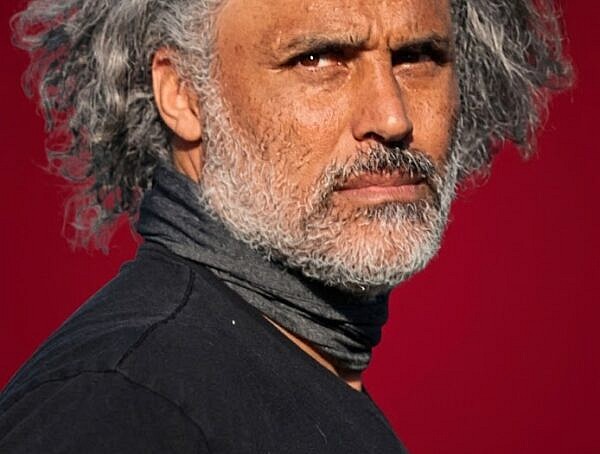
Garden Hills asking, “Is Rick Fox Unstable & Broke?” Something is not right.
The Fox in the Garden: A Question of Intent or Necessity? The political landscape of The Bahamas is no stranger to …
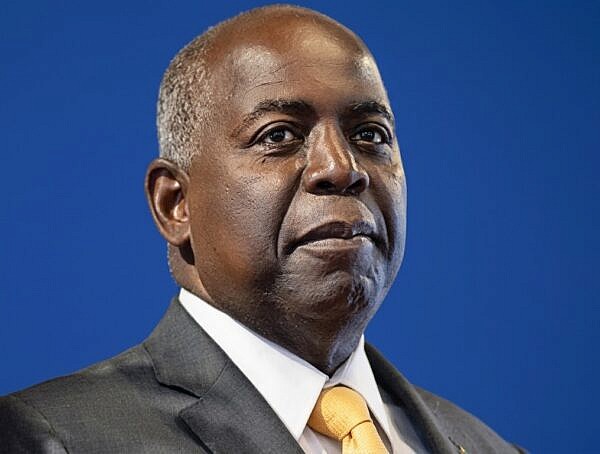
NO MORE TURNING BACK! LET US MOVE FORWARD TOWARD PROGRESS!!!!
The Case for Continuity: Why The Bahamas Must Break the Cycle of "Stop, Review, and Cancel" Progress is rarely a sprint; …
How the GBPA’s “Sign Ban” Handed Pintard an Unfair Advantage
For decades, the rhythm of Bahamian democracy has been visual. From the moment an election is called, our streets transform …