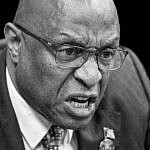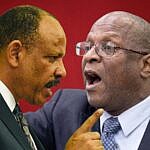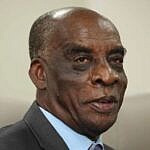







In the aftermath of a shocking defeat, the Free National Movement (FNM) was forced to stand before its own reflection, unblinking, unguarded, unmasked. What stared back was not merely the face of a wounded political organization but the hollowed soul of a party that had lost its way. The Bahamian people, with their ballots, had delivered a judgment as brutal as it was clear. Losing the last general election by an earth-shattering margin of 32–7 wasn’t a misstep. It was a merciless beatdown, a repudiation of arrogance, complacency, and disconnect.
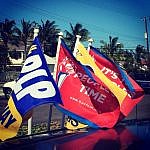
The FNM’s fall from grace wasn’t sudden, it was the slow rot of hubris disguised as confidence. When the dust settled, the red banners looked faded, the slogans hollow. The Bahamian electorate, often accused of short memory, remembered everything. They remembered the pain, the pandemic missteps, the detachment from the pulse of the people. And when given the chance, they returned a verdict that could not be spun: You are out of touch. You are out of time.
The West End/Bimini Blowout
Then came the West End and Bimini by-election, a supposed moment of redemption that turned into a postscript of humiliation. The FNM, instead of clawing back respect, sank deeper into irrelevance. The numbers told a story that no press release could spin: fewer votes than before, less enthusiasm, less belief. The faithful who once filled rallies stayed home, their silence louder than any cheer.
Hubert Ingraham, the elder statesman, had warned that the results would not be good, and they weren’t. His words, prophetic and painful, hung over the party like a cloud. When defeat came again, the knives came out. The FNM, always quick to eat its own, turned inward. The scapegoat was ready: Michael Pintard. His leadership, they said, was lacklustre. His speeches were uninspired. His presence is uninspiring. And just like that, the man once hailed as the new face of renewal became the symbol of decay.
The Golden Isles Gamble
Then came the Golden Isles by-election—the latest test, the latest humiliation. Hubert Ingraham, the battle-hardened tactician, had advised Pintard not to take the bait. “Don’t respond to the gooseying,” he warned. Hubert Minnis, too, whispered his unsolicited caution: It’s not worth it. Don’t do it.
But Pintard, desperate to prove that he was his own man, took the plunge. Pride over prudence. Ego over experience. He believed he was defying the old guard, but in truth, he was walking into a trap. The outcome was scripted before the first vote was cast. The results weren’t just bad—they were devastating. The message was unmistakable: Pintard cannot win. Not now, not later.
Bloodletting and Blame
Behind the scenes, the FNM has become a theatre of whispers and backstabbing. The once disciplined machinery now sputters with paranoia. Brent Symonette, long the quiet puppeteer in the shadows, emerged to chastise both Ingraham and Minnis, angry that his protégé was being publicly shredded. But the damage was done. Pintard’s image, already battered, now lies in tatters.
In their embarrassment, party loyalists have clung to delusions like a drowning man to driftwood. They insist that Brian Brown “did well.” They speak of low voter turnout as though it were a life raft, convincing themselves that they still have a chance. But the truth is merciless: when a man who has walked a constituency for fifteen years cannot defeat an unknown who campaigned for forty-one days, the problem is not the voters, it is the vision. The FNM’s rhetoric is collapsing under the weight of its own wishful thinking.
The Mirage of Hope
To watch the FNM now is to watch a once proud ship taking on water while the crew argues over who holds the wheel. The intellectuals, the veterans, the financiers, all are “grasping at a straw,” pretending that the tide is not against them. But no amount of spin can rewrite the scoreboard. The Bahamian people have spoken twice, and loudly. The FNM is not being misunderstood, they are being rejected.
And yet, the party persists in its cycle of denial. Instead of introspection, there is infighting. Instead of a strategy, there is suspicion. Word on the street is that Pintard is under immense pressure to step aside, that somewhere in the political shadows, a mysterious figure waits to emerge. A saviour, perhaps. Or just another chapter in the FNM’s long tragedy of misplaced hope.
The Plot Thickens
Now, as the dust settles over the Golden Isles, the air at FNM headquarters is thick with unease. Eyes dart, alliances shift, and every whisper carries the weight of betrayal. The once-great movement, built on the promise of progress, now resembles a family at war with itself. The laughter of the victors outside contrasts with the murmurs of panic within.
The FNM’s reckoning has arrived. This is not just about Pintard, Minnis, or Ingraham. It is about a party that lost its moral compass and mistook political survival for leadership. It is about a movement that once inspired a nation and now inspires only pity.
The mirror does not lie. What the FNM sees now is not just defeat, it is the ghost of its former glory. And unless it finds the courage to confront that ghost, to tear itself down and rebuild from the ashes, the plot will not just thicken. It will end.
More from LOCAL
Garden Hills asking, “Is Rick Fox Unstable & Broke?” Something is not right.
The Fox in the Garden: A Question of Intent or Necessity? The political landscape of The Bahamas is no stranger to …
NO MORE TURNING BACK! LET US MOVE FORWARD TOWARD PROGRESS!!!!
The Case for Continuity: Why The Bahamas Must Break the Cycle of "Stop, Review, and Cancel" Progress is rarely a sprint; …
How the GBPA’s “Sign Ban” Handed Pintard an Unfair Advantage
For decades, the rhythm of Bahamian democracy has been visual. From the moment an election is called, our streets transform …