






The Iron Grip of the “Country Within a Country”: Unmasking the GBPA and FNM Alliance
The recent theater involving the Grand Bahama Port Authority (GBPA) and the removal of political signage in Freeport is not merely a dispute over “bye-laws” or “traffic visibility.” It is a calculated, desperate manifestation of old colonial tactics dressed in modern bureaucratic clothing. As the political ground shifts beneath the Free National Movement (FNM), we are witnessing a “go for broke” strategy that utilizes the GBPA as a private enforcement arm—a “goon squad” designed to intimidate the Bahamian people and maintain a stranglehold on the City of Freeport.
The Myth of Neutrality and the “Uncle Tom” Paradigm
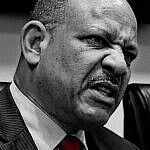
The GBPA’s press release, wrapped in the cold, clinical language of “orderly development” and “prior approval,” masks a deeper, more insidious reality. At the helm of this compliance crusade is Ian Rolle, whose actions have increasingly signaled a prioritization of his own paycheck over the prosperity of Freeport residents.
To many observers, Rolle has become the quintessential “Uncle Tom” of the colonial corporate structure. By weaponizing the Freeport (Control of Advertisements) Bye-laws to suppress political expression, he demonstrates that his integrity is secondary to his masters’ interests. Instead of fostering an environment where Freeport can finally flourish and integrate fully into the national fabric, he presides over a system that treats the city as a “country within a country”—a private fiefdom where the rules are applied selectively to stifle dissent and protect the status quo.
Pintard’s Faustian Bargain
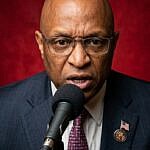
This administrative aggression cannot be separated from the leadership of Michael Pintard and the FNM. Sensing a loss of momentum and a public weary of empty promises, Pintard appears to have “sold his soul to the devil” in exchange for the continued backing of the Port’s elite. The FNM is no longer a party of the people; it has transformed into a political entity that relies on bullying tactics to maintain relevance.
The strategy is transparent:
-
The “Pickle a Fight” Maneuver: By instigating a conflict over signage and then hiding behind the “rule of law,” the FNM and GBPA create a distraction from the lack of economic progress in Grand Bahama.
-
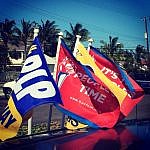
Intimidation via Enforcement: The removal of signs is a psychological tactic. It is intended to signal to the electorate that the GBPA and FNM own the landscape—both physical and political—and that any challenge to their authority will be met with swift, “lawful” erasure.
The “Goon Squad” and Colonial Relics
The characterization of the GBPA’s enforcement as a “goon squad” isn’t hyperbole; it is a reflection of the heavy-handedness used to remind Bahamians who truly holds the keys to the city. These are the “old colonial tactics” that the Bahamas has fought for decades to move beyond. The idea that a private corporation can dictate the terms of political engagement in a sovereign nation—under the guise of “preserving property rights”—is an affront to the democratic process.
The GBPA acts as though it is immune to the national will, operating with a level of autonomy that defies the spirit of Bahamian independence. They are “hell-bent” on preserving this anomaly, ensuring that Freeport remains a separate entity where the Port’s interests supersede the national interest. When the GBPA removal crews descend upon campaign signs, they aren’t just cleaning the streets; they are attempting to sweep away the voices of those who demand a more equitable and integrated Bahamas.
Moving Deliberately Against the Past
The people of the Bahamas, and specifically the residents of Freeport, must see this for what it is: a desperate gasp from a dying system. The FNM is “going for broke” because they know the people are tired of the bullying. They are tired of a Port Authority that acts as a government without the accountability of an election. They are tired of leaders like Ian Rolle who facilitate this charade for a comfortable seat at the table.
We must move deliberately against these tactics. The “country within a country” model is a relic of a bygone era that serves only the few at the expense of the many. If the FNM and the GBPA want to “pickle a fight,” let it be a fight for the soul of Freeport. Let it be a fight where the people finally demand that the law serves the citizen, not the corporation.
The removal of a sign cannot hide the fact that the ground is indeed moving. No amount of “bye-law” enforcement or “goon squad” activity can stop an idea whose time has come: the idea that Freeport belongs to the Bahamian people, not to a private compound on Cedar Street. It is time to reject the intimidation, expose the puppets, and reclaim our sovereignty from those who have sold it for a paycheck.
More from LOCAL

RICK FOX THE HUSTLER? NO JOB, NO HOME, NO TRUST!
The Hustler’s Gambit: Why Instability is a Liability for Garden Hills The political landscape of The Bahamas has long been a …
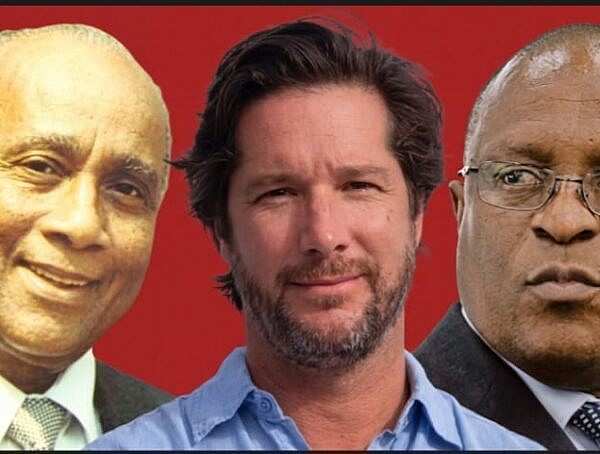
PINTARD USE GBPA TO TELL GINGER TO REMOVE PLP SIGN
The Ghost of Perpall Track: Why the FNM’s New Tactics Smell Like Old Desperation The salt air of Grand Bahama is …

ALLEGATIONS THAT DAMES MAY BE QUESTIONED BY US AUTHORITIES?
The Looming Implosion: Marvin Dames and the FNM’s Date with Destiny In politics, perception often carries more weight than a sworn …