

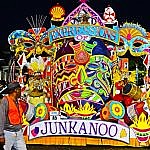






For months leading up to the 2025 Boxing Day Parade, a familiar chorus grew louder: Junkanoo is finished.
The dissolution of the Junkanoo Corporation of New Providence, the administrative shake-ups, and the refusal to bow to entrenched interests were all framed as signs of impending disaster. Social media prophets and well-placed whisperers predicted chaos, empty streets, and cultural embarrassment. Some even seemed eager for failure, as though collapse itself would validate their long-held grip on a national treasure.
And then Boxing Day came. What unfolded was not doom, but deliverance.
The 2025 Boxing Day Parade was a smashing success—not because it was perfect, but because it was honest, resilient, and unmistakably Junkanoo. The horns still cried. The drums still spoke. The costumes still shimmered under Bay Street lights. Most importantly, the people came. Bahamians showed up in their thousands, reclaiming what has always been theirs: a cultural expression rooted in community, creativity, and defiance against control.
This success did not happen by accident. It happened despite coordinated efforts to muddy the waters.
The NJC lived up to their billing. They came with experience, enthusiasm and prepared to execute, especially being under pressure from predecessors and those who would celebrate failure.
Let us be clear: not all criticism was insincere. Change naturally brings discomfort, and Junkanoo—like any living tradition—must constantly negotiate the tension between preservation and progress. There were minor hiccups, as there always are at major national events. No honest observer would deny that.
But there were also ulterior motives at play.
Too many voices crying “save Junkanoo” were, in truth, trying to save their access to Junkanoo’s purse. For years, a small but influential circle treated the culture as a private revenue stream—an exclusive franchise rather than a public trust. When that grip began to loosen, the narrative quickly shifted from collaboration to catastrophe. Sympathy was courted. Fear was weaponized. And the public was told that Junkanoo could not survive without specific individuals or structures.
Boxing Day proved otherwise.What it also proved is the value of leadership under fire.
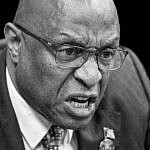
Minister of Youth, Sports, and Culture Mario Bowleg stood his ground when retreat would have been politically easier. He faced relentless criticism, some of it fair, much of it not. He endured coordinated attacks designed to break resolve and force a reversal of course. Yet he refused to buckle. That kind of resolve is rare in public life.
Against incredible odds, Bowleg showed mettle and courage—not the loud, theatrical kind, but the steady resolve of someone who understands that reform is never applauded by those who benefit most from the status quo. He resisted the temptation to appease powerful voices demanding a return to “how things used to be,” knowing full well that “used to be” is often code for exclusion, opacity, and unchecked control.
It is now patently clear that this resolve saved Junkanoo from a slow strangulation.
By refusing to surrender the culture to those who wanted to maintain a death grip on it, the Minister forced an uncomfortable but necessary reckoning: Junkanoo does not belong to gatekeepers. It belongs to the people, the groups, the drummers, the designers, the youth coming up behind them, and the Bahamian public who line the streets year after year.
The parade’s success sent an unmistakable message: Junkanoo is bigger than any committee, any personality, or any financial interest. It thrives not because of control, but because of collective will.
There is also a more profound lesson here for The Bahamas.
We are often too quick to equate disruption with destruction. Any attempt to reform entrenched systems is met with cries of collapse, when in reality, collapse usually occurs when reform is avoided for too long. Boxing Day showed that when leadership is willing to absorb short-term discomfort, long-term preservation becomes possible.
This does not mean the work is finished. Junkanoo still needs transparency, sustainable funding models, youth development pipelines, and genuine stakeholder engagement. Success on Boxing Day is not a license for complacency; it is a foundation upon which to build.
But credit must be given where it is due.
Mario Bowleg deserves congratulations for standing firm when many would have retreated. He chose stewardship over surrender, principle over popularity. Many Bahamians—quietly, thoughtfully, and now more openly—are grateful.
The naysayers were wrong.
The doomsayers were exposed.
And Junkanoo, once again, reminded us why it has survived slavery, colonialism, neglect, and internal sabotage.
The doomsayers were exposed.
And Junkanoo, once again, reminded us why it has survived slavery, colonialism, neglect, and internal sabotage.
It survives because it is ours.
And on Boxing Day 2025, it proved that no amount of noise can silence a culture that refuses to be owned.
More from CULTURE

Silence on Bay Street: One Family Answers the Noise
The silence is deafening! The loud bragging about four straight victories, the chest-thumping, the premature pressure—it all proved to be the …
COLOURS WINNING BEYOND BAY STREET
In a parade season where expectations were already sky-high, Colours Entertainment once again rose above the noise and delivered a …
When Courage Takes a Holiday: The Curious Case of Junkanoo’s Silent Men. SPEAK UP VOLA!
In the theatre of Bahamian politics and culture, few spectacles are as colourful, or as petty, as the recent melodrama …