





There are moments when silence becomes louder than any press conference. That silence now echoes from empty lots, surveyed and subdivided, where families were told homes would rise. Rick Fox promised a future built of resilience and dignity, 1,000 homes, starting with a 30-home pilot in South Abaco. Jobs, too: a $50 million manufacturing plant at Arawak Cay, meant to anchor opportunity for Bahamians. Those promises were announced with global fanfare. What followed, however, has been a troubling quiet, punctuated only by reports of massive projects unfolding thousands of miles away.
COME CLEAN BRO, This is an accounting, one that has not yet been given.
The mystery begins with timelines that came and went. A pilot project was supposed to prove the concept and commitment. The land was surveyed. Lots were plotted. People waited. Yet the houses did not appear. In the same span of time, we watched the same company announce and execute deliveries for marquee developments in Saudi Arabia. Pavers reached the desert. Mega-scale housing partnerships were unveiled. An industrial facility in Abu Dhabi was celebrated for its future capacity. The contrast is stark, and it demands explanation.
If the Bahamas was the birthplace of this bold vision, why was it not the beneficiary of its first fruits?
The most unsettling question is not whether global expansion is wrong. It isn’t. Bahamians understand ambition. What troubles people is the sequence: the small island state becomes the headline—proof of climate virtue and hurricane resilience, while the real execution seems to happen elsewhere. When our country is used to tell a story, but not to finish it, accountability becomes more than a courtesy. It becomes a duty.
We are told now that no public money was received and that the company stands ready to build when “the government does its part.” That statement, rather than settling matters, opens new ones. What exactly was agreed to? Was there a binding construction contract, or only a memorandum of understanding? Who was responsible for land readiness, utilities, permits, financing, and notice-to-proceed? What milestones were set, and missed, by whom? These are not technicalities. They are the backbone of public trust.
Opacity is the enemy here. An MoU can be many things: a sincere step forward, a placeholder, or a public-relations bridge to something larger. Without full disclosure of the terms, timelines, and conditions, the Bahamian public is left guessing. Guessing breeds resentment. Resentment corrodes faith—not only in a company, but in the institutions that stand beside it at podiums and photo ops.
There is also the matter of respect. When promises are made to a government, especially one representing people still recovering from a disaster, those promises carry moral weight. Respect looks like follow-through, or at the very least, candour when plans change. Respect looks like standing before the people you addressed so confidently and explaining, plainly, what happened and why. Respect does not look like progress abroad, paired with patience at home.
Some will argue that pilots are complicated, that scaling takes time, that global supply chains and approvals are messy. All true. But none of that excuses silence. None of that explains why demonstrable capacity could be mobilized for foreign partners while Bahamian families were asked to keep waiting. None of those answers why a proposed manufacturing plant meant to create local jobs has not materialized, while another, far larger facility was announced elsewhere.
This is why the “pawn” question lingers. Not as a verdict, but as a warning. When a small nation’s suffering and hopes are used to authenticate a narrative, the burden of proof is higher—not lower. If The Bahamas were a proof of concept, then it deserved proof of delivery. If it were a partner, then it deserves transparency. If it was neither, then the public deserves to know that, too.
Accountability now requires specifics. Publish the agreements. Lay out the milestones. Show the approvals that were obtained and those that were not. Clarify who was responsible for what, and when. If delays were unavoidable, explain them without euphemism. If priorities shifted, own that decision and its consequences. The truth, even when uncomfortable, is a form of respect.
The shadow hanging over this story is not cast by ambition or innovation. It is cast by unanswered questions. And until those questions are met with facts—documents, dates, and decisions—the empty lots in Abaco will remain symbols not just of delay, but of something more damaging: the sense that The Bahamas was good enough for the promise, but not for the delivery.
We deserve better than that. We deserve the truth, in full daylight. Truth be told, Rick Fox is a liar.
More from LOCAL
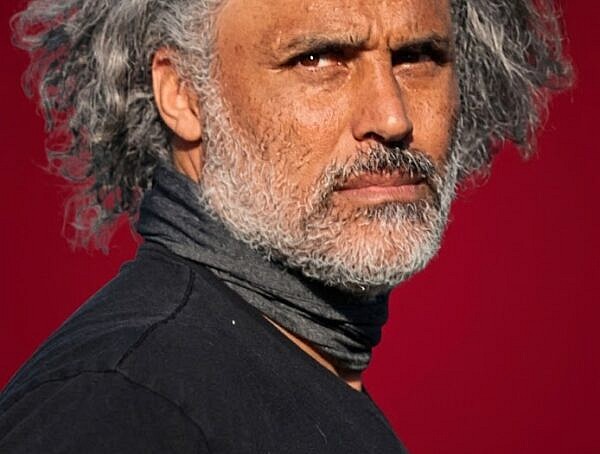
Garden Hills asking, “Is Rick Fox Unstable & Broke?” Something is not right.
The Fox in the Garden: A Question of Intent or Necessity? The political landscape of The Bahamas is no stranger to …
NO MORE TURNING BACK! LET US MOVE FORWARD TOWARD PROGRESS!!!!
The Case for Continuity: Why The Bahamas Must Break the Cycle of "Stop, Review, and Cancel" Progress is rarely a sprint; …
How the GBPA’s “Sign Ban” Handed Pintard an Unfair Advantage
For decades, the rhythm of Bahamian democracy has been visual. From the moment an election is called, our streets transform …