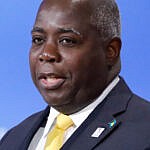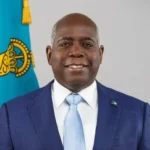






The electoral dust has barely settled, yet the debate surrounding the Free National Movement’s future has already intensified. The party’s latest disappointment has reopened old wounds and revived uncomfortable questions that many supporters have quietly wrestled with for years: What exactly is the FNM today? More importantly, who is prepared to lead it into the future?
Political parties survive defeats all the time. Defeat alone does not destroy institutions. What destroys them is uncertainty, confusion, and the inability to define who they are and where they are going. The FNM appears trapped in precisely that cycle.
Historically, the FNM was born not as a traditional political movement with a single ideological stream, but as a coalition—an experiment that brought together diverse interests united by a common cause. It relied heavily on attracting personalities and broadening its appeal beyond its original base. That flexibility once worked to its advantage. It helped the party evolve and eventually produce victories under strong leaders.
But therein lies the problem: the FNM’s greatest strength may also be its greatest weakness.
The party often appears to depend more on personalities than institutional identity. When strong figures emerge, the party rises. When those figures depart, confusion follows. The transitions have never appeared seamless because succession planning has always seemed secondary to immediate political survival.
Today, the party confronts that reality again.
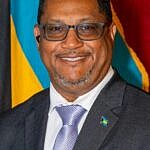
Michael Pintard entered leadership with energy, charisma and communication skills. He projected activism and opposition strength. Yet critics argue that enthusiasm alone cannot replace strategic leadership. Questions persist over whether he has unified the organization or merely managed divisions temporarily.
The deeper issue is that after repeated electoral setbacks, many supporters appear unconvinced that the current arrangement represents the future. The uncertainty surrounding leadership has become as much a story as policy itself.
The situation becomes even more troubling when examined in the context of the succession question.
Who comes next?
Political parties preparing for government usually cultivate a bench — emerging leaders who are groomed, tested, and positioned to assume command when necessary. The FNM appears alarmingly thin in this area. Potential successors have either remained in the background, been politically diminished, or never fully developed into national alternatives.
The result is a dangerous vacuum.
Without succession planning, parties become dependent on one figure. Once confidence in that figure weakens, instability spreads quickly. The organization starts looking outward rather than inward for rescue.
That is where the FNM risks finding itself — metaphorically up the gum tree.
If supporters conclude there is no obvious internal answer, pressure inevitably grows to search elsewhere, recycle old faces, or rebuild through another political experiment. Yet history shows reinvention without identity merely postpones the crisis.
The greatest threat facing the FNM is not Pintard himself. It is the absence of a clearly defined political identity capable of surviving beyond individual leaders.
Parties without identity drift. Parties without succession stagnate. Parties without both can disappear into long periods of irrelevance.
The FNM now stands at a crossroads. It can undertake the difficult work of redefining itself, developing leadership pipelines and restoring organizational confidence, or continue repeating cycles of hope followed by disappointment.
History offers a warning: political wilderness can last far longer than expected.
The question now is whether the FNM recognizes it before the wilderness recognizes them.
More from LOCAL
AGAINST ALL ODDS: SENATOR KENO WONG HITS A HOME RUN ON THE INTERNATIONAL STAGE
Life has a way of throwing curveballs. Some people face one strike, others two, and some find themselves standing at …
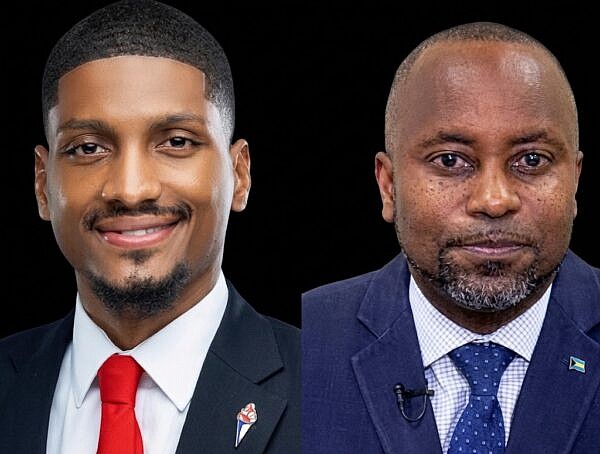
FNM CONCLAVE: REVIVAL OR POLITICAL FRATERNIZATION?
THE FNM IS IN QUICKSAND, the more they wiggle, the deeper they sink. The Free National Movement (FNM) is in such …
FREEPORT’S FUTURE AT RISK: IS THERE A HIDDEN AGENDA TO STRIP THE GBPA OF ITS ASSETS?
By Bahamas Herald | Opinion FREEPORT, GRAND BAHAMA — Something appears to be stirring behind the walls of the Grand Bahama …