




For decades, Grand Bahama has existed not as a premier destination of the Commonwealth, but as a fiefdom—a “country within a country” where Bahamians’ sovereign rights go to die. To understand the strangulating grip the Grand Bahama Port Authority (GBPA) holds today, one must look past the manicured hedges of Freeport and into the dark, transactional history of the United Bahamian Party (UBP), the rise of the Free National Movement (FNM), and the ghost of a convicted fraudster named Wallace Groves.
The raw truth is uncomfortable: Grand Bahamians have been led like “lambs to the slaughter” by a sequence of political manoeuvres designed to keep power in the hands of an unelected elite. Today, as Prime Minister Philip “Brave” Davis moves to dismantle this illegal self-imposed government, the silence in the streets of Freeport is baffling. Are the people so broken by decades of “suffocating control” that they no longer recognize the hands reaching out to rescue them?
A Foundation of Fraud and Mob Ties
The tragedy of Grand Bahama began in 1955 with a handshake between the UBP—an all-white oligarchy—and Wallace Groves. It is a historical stain that the UBP saw fit to hand over miles of Bahamian soil and total administrative authority to a man who, just years prior, had been convicted of federal stock fraud in the United States.
But Groves did not act alone. He was the architect, but Sir Stafford Sands was the engineer. As the kingpin of the “Bay Street Boys,” Sands was a man whose ambition was matched only by his lack of transparency. History reveals a sinister nexus: Sands’ association with Meyer Lansky, the notorious American crime boss. It is a matter of record that Lansky sought a Caribbean foothold for his gambling and money-laundering operations. Sands, manoeuvring himself through the halls of power, used this dark relationship to secure the funding and the “muscle” needed to ensure Freeport was established as a private enclave.
The Hawksbill Creek Agreement (HCA) wasn’t a development contract; it was a surrender of sovereignty. The UBP effectively handed the country’s keys over to a man who understood one thing: exploitation. Under this agreement, the GBPA became the judge, jury, and executioner of economic life. They decided who could open a shop, own land, and prosper.
The Political Restyling: From UBP to FNM
When Lynden Pindling and the PLP broke the back of the oligarchy in 1967, the UBP didn’t vanish; it evolved. After the demoralizing blow to the ego of the Oligarch, Sir Stafford Sands—who eventually abandoned the Bahamas for exile in Spain—the remnants of that “Bay Street Boys” era merged to form the FNM in 1970. They brought with them the same philosophy, just with a different face in the front.
The DNA remained identical: a protective stance toward the Port Authority’s autonomy at the expense of the Bahamian worker. This was solidified in 1992, when Hubert Ingraham’s FNM government renewed the Hawksbill Creek Agreement that Pindling had fought so hard to restrain. Ingraham didn’t just maintain the status quo; he doubled down on Groves and Sands’s original game plan. History cannot be laundered: it has always been the FNM and its predecessors pandering to the GBPA from behind the scenes, ensuring the “country within a country” remained insulated from Bahamian law.
The Modern Enablers
The question today is why Michael Pintard, a man who boasts of his Cat Island roots, seems more enamoured with protecting the Port’s interests than the survival of his own people. What was in the “cool aid” that makes a Bahamian leader defend a private entity that has reduced his constituents to beggars? Pintard is adamant that the GBPA should maintain its authority, despite the obvious evidence that the Port has failed its mandate.
The recent confrontational sequence and the subsequent Tribunal results have stripped away the mask. The findings are clear: the GBPA has erred. It has operated outside its intended purpose, failing to maintain the infrastructure and economic vitality it promised in exchange for its massive tax exemptions. The Port has behaved as if Grand Bahama belonged to them and we, the Bahamian people, needed their permission to exist.
The Tribunal of Truth
They have controlled the real estate market with a predatory zeal, ensuring that while the Port’s shareholders remained insulated, the average Grand Bahamian suffered through a weakened economy. Many have stayed in Freeport, too proud to return to Nassau, living in a state of perpetual hope deferred, suffering in silence while the Port strangled their future.
For seventy years, the Port Authority has functioned as an illegal self-imposed government, yet the FNM continues to act as its political wing. They represent the interests of the boardroom, not the barroom. They represent the shareholders, not the shopkeepers.
The “Brave” Intervention
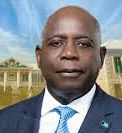
Prime Minister Philip Davis has finally been “Brave enough” to put his foot down. The current PLP government’s move to hold the GBPA accountable is not a political vendetta; it is a rescue mission. For the first time in generations, the central government is asserting that the law of the land applies even within Freeport’s boundaries.
Yet, we must ask: Where is the celebration? If a prisoner’s cell door is kicked open, why does he sit in the corner? Perhaps the trauma of the GBPA’s “suffocating control” has led to a form of collective Stockholm Syndrome. The Port has held the power to determine livelihoods for so long that the people fear the “clutches” they are in more than they trust the freedom being offered.
The Path Forward: Restoration of the Soul
The GBPA cannot, should not, and will not continue to subject Grand Bahamians to this hardship. The legacy of Wallace Groves, the ghost of Stafford Sands, and the enabling policies of Hubert Ingraham and Michael Pintard must be retired to the dustbin of history.
Grand Bahama needs more than just a change in management; it needs a restoration of its soul. It needs to be reintegrated into the fabric of the Commonwealth of The Bahamas. The time for “permission to exist” is over. It is time for Grand Bahama to belong to the Bahamians once again.
The chains were forged in 1955 by a fraudster and a mob-connected lawyer. They were reinforced in 1992 by a party that prioritizes corporate autonomy over national sovereignty. Today, those chains are being broken. Grand Bahama, the door is open. It is time to walk out.
More from LOCAL
Garden Hills asking, “Is Rick Fox Unstable & Broke?” Something is not right.
The Fox in the Garden: A Question of Intent or Necessity? The political landscape of The Bahamas is no stranger to …
NO MORE TURNING BACK! LET US MOVE FORWARD TOWARD PROGRESS!!!!
The Case for Continuity: Why The Bahamas Must Break the Cycle of "Stop, Review, and Cancel" Progress is rarely a sprint; …
How the GBPA’s “Sign Ban” Handed Pintard an Unfair Advantage
For decades, the rhythm of Bahamian democracy has been visual. From the moment an election is called, our streets transform …