

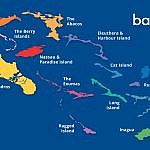



Grand Bahama’s modern political history is inseparable from its long-standing loyalty to the Free National Movement (FNM). For decades, the island has reliably delivered electoral support to the party—so much so that it has been casually branded “FNM country.” But what has that loyalty produced in return?
The uncomfortable truth is this: Grand Bahama has given much and received very little.
Representation Without Results
During the FNM’s most recent term in office, Grand Bahama was not short of senior representation:
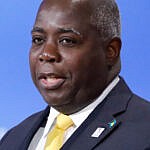
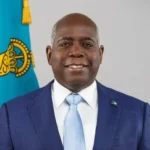
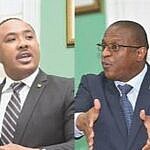
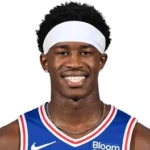
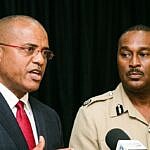
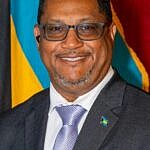
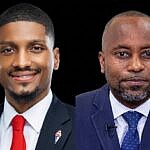
- K. Peter Turnquest served as Deputy Prime Minister and Minister of Finance while representing East Grand Bahama.
- Michael Pintard held multiple Cabinet posts, including Minister of Agriculture and Marine Resources.
- Kwasi Thompson and Iram Lewis both served as Ministers of State with responsibility for Grand Bahama.
By any reasonable standard, this level of access to power should have translated into visible, transformative change. Instead, Freeport continued to decline—economically, physically, and psychologically.
The Visible Decline of Freeport
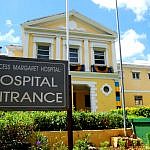
Long before Hurricane Dorian, Freeport was already struggling. After Dorian, the failure to aggressively rebuild and reimagine the city became impossible to ignore. Derelict buildings remained untouched, infrastructure lagged, and entire neighborhoods looked frozen in disaster mode long after the cameras left.
For residents and visitors alike, the question became unavoidable:
How does an island with this much political clout look so neglected?
How does an island with this much political clout look so neglected?
Comfort With the Status Quo
One of the most troubling aspects of this period was the perception that some political leaders appeared more comfortable maintaining relationships with powerful interests—such as the Grand Bahama Port Authority—than forcefully advocating for ordinary residents.
When loyalty is guaranteed, accountability disappears. Grand Bahama’s consistent voting patterns may have unintentionally taught the FNM that the island could be taken for granted without consequence.
A Different Political Reality Emerging
Meanwhile, under the Progressive Liberal Party (PLP), Grand Bahama has begun to see more direct engagement, investment commitments, and visible action. This is not about blind praise or party worship—it is about comparing outcomes.
The irony is striking: even as the PLP delivers tangible progress, segments of Grand Bahama remain politically hostile to the party, clinging to old allegiances that have yielded diminishing returns.
The Real Question
The issue is not whether Grand Bahamians are inferior, foolish, or incapable—they are none of those things. The real question is:
Why should any community continue to reward neglect with loyalty?
Political maturity is not about tradition or identity; it is about leverage. No party should feel entitled to Grand Bahama’s support. Votes are not inheritances—they are contracts.
Until Grand Bahama voters are willing to withhold loyalty and demand performance, no political party—FNM or otherwise—will feel compelled to treat the island as a true priority.
Respect in politics is not given.
It is enforced.
It is enforced.
More from LOCAL
Dillon Knowles Is Carrying Water for the GBPA While Freeport Crumbles
Former Grand Bahama Chamber of Commerce President Dillon Knowles has offered a spirited defence of the Grand Bahama Port Authority …
AGAINST ALL ODDS: SENATOR KENO WONG HITS A HOME RUN ON THE INTERNATIONAL STAGE
Life has a way of throwing curveballs. Some people face one strike, others two, and some find themselves standing at …
FNM CONCLAVE: REVIVAL OR POLITICAL FRATERNIZATION?
THE FNM IS IN QUICKSAND, the more they wiggle, the deeper they sink. The Free National Movement (FNM) is in such …