

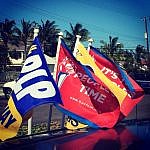



For decades, the rhythm of Bahamian democracy has been visual. From the moment an election is called, our streets transform into a mosaic of colour—posters, banners, and roadside signs that signal a vibrant, if noisy, competition for the soul of the nation. But in Freeport, that rhythm has been silenced by an unprecedented, heavy-handed intervention.
Under the guise of “order” and “policy,” the Grand Bahama Port Authority (GBPA) has brazenly inserted itself into the electoral process, enforcing a directive that effectively bans physical campaign signs. While the GBPA frames this as a neutral, blanket rule applying to all parties, the reality on the ground tells a much more cynical story. By stripping away the most accessible form of political expression, the GBPA hasn’t levelled the playing field; they have handed Michael Pintard and the Free National Movement (FNM) a total monopoly on campaign advertising in the nation’s second city.
The math of this manipulation is simple. Long before this sudden enforcement of sign removal, the FNM had already moved to secure a dominant, near-exclusive presence across Freeport’s digital billboard network. These high-impact, high-traffic platforms are the most visible real estate in the city. When the GBPA “neutralized” the landscape by banning physical posters, they didn’t touch the digital screens. The result? A sterile Freeport where the only faces looking back at voters are those of FNM candidates.
This isn’t an “unintended consequence” of urban management; it is a surgical strike against political visibility. For the grassroots candidate or the opposition party, a roadside sign is the most cost-effective way to reach the masses. By eliminating that option while leaving the high-priced digital landscape intact, the GBPA has ensured that wealth and pre-existing corporate arrangements dictate who gets to be seen.
The timing of this “cleanliness” campaign is too convenient to ignore. For months, Michael Pintard has been the GBPA’s most vocal defender. At a time when the Davis administration has sought to hold the Port Authority accountable through historic tribunal decisions—demanding that they live up to their obligations under the Hawksbill Creek Agreement—Pintard has stood as their shield. He has consistently argued for the preservation of their unique autonomy, essentially campaigning for the status quo of an institution that many feel has outlived its effectiveness.
The optics of this alliance are troubling, to say the least. Reports have long swirled regarding the financial ties between the two, with some media outlets alleging that the FNM’s previous campaign was buoyed by millions in GBPA-linked support. When you add the fact that Pintard’s wife is employed by a GBPA-owned entity, the “coincidence” of this sign ban starts to look more like a corporate kickback.
What we are witnessing is the “brazen insertion” of a private entity into a public democratic exercise. The GBPA is acting less like a municipal manager and more like a political strategist. By silencing the “visual noise” of the election, they haven’t made Freeport more beautiful; they have made it less democratic. They have created a vacuum and ensured that only Michael Pintard has the keys to fill it.
For the voters moving through Freeport today, the message is clear. The GBPA is signalling that it still owns the city—not just its land and utilities, but also its political narrative. In politics, the most important stories are often told through these subtle shifts in the mechanics of visibility. The GBPA and Pintard may think they have engineered a quiet victory, but the Bahamian people have always been able to see through a rigged game. The silence in Freeport is deafening, and it speaks volumes about the lengths to which a desperate institution will go to protect its favourite advocate.
More from LOCAL
“RELIEF IS COMING”: PUBLIC HOSPITALS AUTHORITY ANNOUNCES MAJOR RECLASSIFICATION AND PROMOTION EXERCISE
NASSAU, Bahamas — The Public Hospitals Authority (PHA) is proud to announce the commencement of a structured, comprehensive reclassification and …
IS DAMES MAN MALCOLM GOODMAN CUTTING A DEAL?
The Ghost of Mount Moriah: Why the Dames Drug Bust is the FNM’s Final Crack The political air in the Bahamas …
FNM GUILTY OF PLAYING A DANGEROUS GAME
The Ghost of 1972: Why "Goon Squad" Politics Have No Place in Modern Bahamas The salt air of the Bahamas is …