





For decades, Freeport was sold as the “Magic City,” a symbol of industrial promise and tropical efficiency. Now, the magic has vanished, replaced by crumbling infrastructure, shuttered storefronts, and a sense of betrayal. As illusions fall away, a sharp question moves from dinner tables to public debate: Where is the money?
The Grand Bahama Port Authority (GBPA), governed by the Hayward and St. George families, has operated for years as a quasi-government. They collected the fees, they managed the land, and they held the keys to the kingdom. Yet, while the people of Grand Bahama suffered through economic stagnation and hurricane devastation, the infrastructure they paid to maintain was left to rot. The discrepancy between the billions collected in service charges and the island’s visual reality suggests something far more sinister than mere mismanagement. It suggests a deliberate siphoning of a nation’s potential.
The South of France Shadow
Rumours have long swirled like a tropical depression over the financial dealings of the GBPA principals. The most damning allegation currently fueling the fire is the “French Connection.” There are persistent claims that the wealth extracted from the backs of Bahamian labourers and business owners has found a cosy home in the South of France.
If these allegations are unfounded, the solution is simple: Can the GBPA publicly declare, under the scrutiny of an independent audit, that they do not hold offshore accounts or property portfolios in France funded by Port resources? Their lack of response has not helped dispel public suspicion. Transparency is widely regarded as the best way to address distrust, yet the Port continues to operate behind a veil of private-company secrecy while performing public-government functions. To the average Grand Bahamian, who struggles with the “exuberant” fees tied to their property, even the mere possibility that their hard-earned money could be financing overseas investments is troubling.
Tears as a Diversionary Tactic
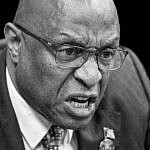
Recently, we witnessed a bizarre and transparent attempt at emotional manipulation. Robert Hayward’s narrative regarding “crying children” felt less like genuine empathy and more like a scripted diversion. It was a classic “look over there” manoeuvre designed to tug at heartstrings so the public would stop looking at the ledgers.
Hayward knows that the moment the conversation shifts to cold, hard cash, the Port is in trouble. An accounting of decades of collected fees would likely reveal a cavernous gap between revenue and reinvestment. By centring the narrative on sentimentality, he hopes to dodge the accountability that comes with being a fiduciary of a city’s future. It is a cynical ploy: use the very suffering you helped create as a shield against the questions of why that suffering exists.
The Architecture of a Managed Decline
One must ask: Is the deterioration of Freeport an accident, or is it a strategy? There is a growing, chilling theory that the GBPA has intentionally kept its “knee on the neck” of the local economy.
The Goal: Frustrate the people until they leave, leaving a hollow shell behind.
The End Game: According to this theory, if economic pressures force Bahamians out and infrastructure falters, the GBPA could be positioned to reshape the island into an enclave for the global elite—a place where local middle-class pressures are minimised.
This isn’t just neglect; it’s a gentrification of an entire island via systemic decay. They underestimated the Bahamian spirit, however. Despite the worst conditions, the people stayed. They stayed, hoping for a heart that the GBPA clearly lacks.
The Brainwashing of the Elite
Perhaps the most difficult part for many is seeing respected community leaders change their stance. For example, Joseph Darville—a widely respected gentleman—has expressed support for Hayward, which has surprised many Grand Bahamians.
It can be disappointing when community voices who have been outspoken appear to support the existing leadership. These individuals may highlight acts of charity by Hayward and the Port, while concerns persist about broader economic challenges. For many, this dynamic creates a sense of distance between leadership and the community’s needs.
A House Divided, A People Forgotten
While the Haywards and St. Georges have engaged in a decade-long power struggle and internal litigation, the children of Grand Bahama have experienced the consequences. The principals of the GBPA may “pull up stakes” at any moment. They have resources that allow mobility and flexibility. Their connection is less to place, more to enterprise.
The ongoing disputes in the press can detract from the core issue: the responsibilities under the Hawksbill Creek Agreement. The Port Authority was granted exceptional powers in exchange for a commitment to develop and maintain the area. While they exercised these powers and managed significant funds, there remains public concern about whether the full obligation was met.
The Day of Reckoning
The people of Grand Bahama are no longer interested in fictitious stories or emotional appeals. They want an audit. They want to know why the “Magic City” looks like a relic of a bygone era while the families in charge live in luxury.
The public response is not solely about politics; it champions the right to transparency over the island’s finances. If the GBPA wishes to address these concerns, increased openness is essential. In the meantime, residents continue to seek answers to the pressing question:
More from LOCAL
Garden Hills asking, “Is Rick Fox Unstable & Broke?” Something is not right.
The Fox in the Garden: A Question of Intent or Necessity? The political landscape of The Bahamas is no stranger to …
NO MORE TURNING BACK! LET US MOVE FORWARD TOWARD PROGRESS!!!!
The Case for Continuity: Why The Bahamas Must Break the Cycle of "Stop, Review, and Cancel" Progress is rarely a sprint; …
How the GBPA’s “Sign Ban” Handed Pintard an Unfair Advantage
For decades, the rhythm of Bahamian democracy has been visual. From the moment an election is called, our streets transform …