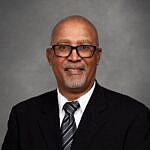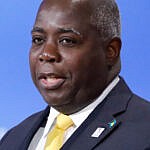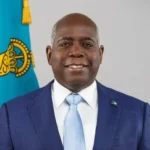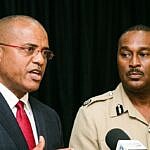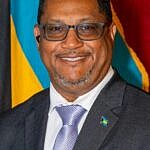







In the theatre of political ambition, there are always the loud voices, the obvious contenders, and the individuals whose names dominate every conversation. Yet sometimes the most revealing story is not who is fighting for a position, but who is absent from the discussion altogether. One such mystery is the continued silence surrounding Kwasi Thompson.
How is it possible that amid all the manoeuvring, internal disputes, leadership speculation, and endless talk of succession, Thompson’s name rarely rises to the surface? After years of service, seniority, and experience, he still appears to remain in the background. The question is simple: why?
Politics is often unforgiving. Longevity does not automatically translate into influence. Service does not always produce visibility. Yet Thompson has remained present through difficult periods, served in government, carried ministerial responsibility, and maintained a steady profile. In many political systems, that résumé alone would guarantee his inclusion in leadership conversations.
Instead, there appears to be an unusual silence.
Perhaps it is because modern politics increasingly rewards aggression over consistency. The spotlight often follows the loudest personalities rather than the most methodical operators. The era of quiet competence has become difficult terrain. The political marketplace now demands branding, constant visibility, and relentless positioning.
But if there is indeed a leadership crisis, shouldn’t the conversation be limited to the usual names?
The question is not whether Thompson should lead. The question is why his candidacy—or even his potential—is seemingly overlooked before the discussion even begins.
Has he chosen to remain behind the curtain? Has the political environment moved past his leadership style? Or has the machinery of politics simply placed him in a category where he is respected but not advanced?
That distinction matters.
Many parties make the mistake of sidelining experienced figures only to discover later that institutional memory and steady hands are indispensable during turbulent periods. Leadership contests often become popularity contests while experience sits quietly in the corner.
Thompson’s trajectory raises broader questions about how political value is measured. Is service still rewarded? Does loyalty matter? Or is politics now exclusively about optics and factional strength?
There is also another possibility: perhaps his time has simply not yet come.
History is filled with leaders who spent years operating in the shadows before circumstances thrust them into the spotlight. Remaining in the background does not necessarily mean irrelevance.
Still, the silence remains striking, and the Free National Movement is in dire need of a leader, one with some experience and who is not tainted. Kwasi Thompson has the qualifications, or does he? Maybe he lacks the one qualification he really wants: loyalty to the status quo, which emasculates him, like it did Michael Pintard.
At a moment when leadership discussions dominate the national conversation, it is astonishing that one of the longer-serving figures continues to attract so little speculation. Whether intentional or not, the omission itself has become part of the story.
And so the question lingers: after all these years, why is Kwasi Thompson still waiting in the wings?
More from LOCAL
AGAINST ALL ODDS: SENATOR KENO WONG HITS A HOME RUN ON THE INTERNATIONAL STAGE
Life has a way of throwing curveballs. Some people face one strike, others two, and some find themselves standing at …
FNM CONCLAVE: REVIVAL OR POLITICAL FRATERNIZATION?
THE FNM IS IN QUICKSAND, the more they wiggle, the deeper they sink. The Free National Movement (FNM) is in such …
FREEPORT’S FUTURE AT RISK: IS THERE A HIDDEN AGENDA TO STRIP THE GBPA OF ITS ASSETS?
By Bahamas Herald | Opinion FREEPORT, GRAND BAHAMA — Something appears to be stirring behind the walls of the Grand Bahama …