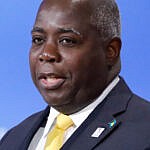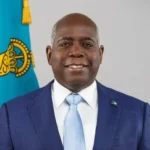






Every few years, the Free National Movement finds itself trapped in the same cycle. The names may change, the factions may shift, but one constant remains: former Prime Minister Hubert Ingraham’s shadow looms over the party. His latest intervention in the FNM’s leadership debate has once again raised a fundamental question. Is he volunteering his opinions, or is he acting on behalf of a faction that still sees him as the gatekeeper to the party’s financial establishment?
Whatever the answer, one thing is increasingly clear. This latest episode is not really about Michael Pintard or anyone else aspiring to lead the FNM. It is about preserving influence over a political organization whose most important battles often appear to revolve around power and money rather than ideas.
The public is repeatedly told that the FNM’s problem is Michael Pintard. Yet that narrative ignores a much larger reality. Many Bahamians have already formed their own opinion of the party. They do not believe the FNM’s greatest concern is improving the lives of ordinary Bahamians. Instead, many see a party preoccupied with controlling the country’s financial levers and satisfying the interests of its traditional power brokers.
Against that backdrop, Ingraham’s re-emergence should surprise no one.
As Prime Minister, Hubert Ingraham presided over decisions that remain controversial today. His administration sold BATELCO, despite widespread public concern about surrendering a valuable national asset. Supporters defended the privatization as modernization. Critics viewed it as the unnecessary disposal of a strategic public enterprise that could have continued generating wealth for the Bahamian people.
Equally controversial was the New Providence Road Improvement Programme, whose costs ballooned dramatically. The project became synonymous with questions about accountability after reports that its price tag climbed by approximately $100 million beyond original expectations. For many Bahamians, satisfactory answers about how those overruns occurred never fully materialized.
INGRAHAM KNOWS!
These are not insignificant matters. They define why many citizens remain sceptical whenever Ingraham positions himself as the wise elder attempting to guide the FNM’s future. To critics, his political legacy is inseparable from major financial decisions that continue to fuel debate today.
That is why the current leadership contest may be less about personalities than about preserving relationships with those who have long financed and influenced the party. Whether Ingraham genuinely prefers one candidate over another may not even be the central question. Remaining close to the financial network that has historically supported the FNM may be the greater prize.
Ironically, if one group should hope Michael Pintard remains leader, it is the Progressive Liberal Party.
From the PLP’s political perspective, replacing Pintard with a more disciplined and strategically focused opponent could make future elections significantly more competitive. Pintard has demonstrated an undeniable ability to attract attention, but politics is won by consistency, organization, and message discipline—not simply by dominating headlines or enjoying the spotlight.
His critics argue that his greatest weakness is his apparent inability to remain focused on a sustained political strategy. The temptation to be centre stage often overshadows the patient work of building a government-in-waiting. That propensity has become what many observers describe as his political Achilles’ heel.
The PLP surely understands this dynamic. A distracted opposition benefits any government seeking re-election. Every day spent managing internal disputes or chasing headlines is a day not spent convincing Bahamians that an alternative government is ready.
From a purely political standpoint, therefore, the smartest strategy for the PLP may be remarkably simple: quietly hope that Michael Pintard remains exactly where he is. Indeed, if politics is about choosing the opponent you are best prepared to defeat, then Pintard could well be the opponent the governing party would most prefer to face in 2031.
Should that happen, the PLP would undoubtedly believe it has an excellent opportunity to accomplish something historic—winning three consecutive general elections.
Ultimately, the FNM’s greatest challenge is not choosing a leader. It is deciding whether it can free itself from the influence of yesterday’s power brokers and convince Bahamians that its priorities have fundamentally changed. Until that happens, every leadership battle will continue to look less like a contest over vision and more like a struggle over who controls the party’s money, influence, and future.
More from LOCAL
AGAINST ALL ODDS: SENATOR KENO WONG HITS A HOME RUN ON THE INTERNATIONAL STAGE
Life has a way of throwing curveballs. Some people face one strike, others two, and some find themselves standing at …
FNM CONCLAVE: REVIVAL OR POLITICAL FRATERNIZATION?
THE FNM IS IN QUICKSAND, the more they wiggle, the deeper they sink. The Free National Movement (FNM) is in such …
FREEPORT’S FUTURE AT RISK: IS THERE A HIDDEN AGENDA TO STRIP THE GBPA OF ITS ASSETS?
By Bahamas Herald | Opinion FREEPORT, GRAND BAHAMA — Something appears to be stirring behind the walls of the Grand Bahama …