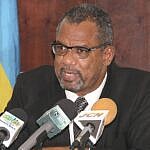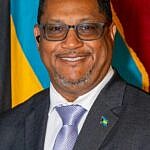









The Public Accounts Committee (PAC) is one of Parliament’s most important accountability instruments. It scrutinises public expenditure, examines the evidence, and reports its findings to Parliament. It was never intended to become a political theatre where opposition politicians chase headlines, manufacture controversy, or desperately search for a “gotcha” moment.
Yet, judging by Michael Pintard’s recent public pronouncements, one must seriously question whether the PAC is pursuing the truth or being exploited for political mileage.
Pintard himself acknowledges that the committee has not received all the relevant documents, transaction records, account histories, or explanations necessary to reach informed conclusions concerning the National Infrastructure Fund and the government’s voucher programme.
If so, why the rush to the press?
Why make public pronouncements suggesting wrongdoing when the committee’s investigation remains incomplete?
You cannot credibly declare that the evidence is insufficient while simultaneously using selective portions of that evidence to create public suspicion.
That is not responsible parliamentary oversight. It risks bastardising the very institution entrusted with protecting the public interest.
Let me be clear: every dollar of taxpayers’ money must be accounted for. Whether the issue concerns $700 million in borrowing, infrastructure expenditure, or $1.56 million in vouchers, the Bahamian people deserve transparency, proper documentation, and truthful answers.
But accountability must never be confused with political opportunism.
The PAC must investigate without fear or favour. Its members should examine witnesses, obtain documents, test explanations, and deliberate carefully before presenting conclusions. Running to the newspapers at every opportunity does not strengthen an investigation. It risks undermining public confidence in its fairness and independence.
And perhaps that is precisely the political calculation.
With the political clock ticking and the footsteps behind Pintard growing louder, one cannot help wondering whether these public performances are designed to reinforce his political standing rather than advance the committee’s work.
Is Pintard genuinely searching for the truth, or desperately searching for a headline that might deliver political advantage?
There is a fundamental difference between exposing wrongdoing through verified evidence and insinuating wrongdoing before the evidence has been fully examined.
I humbly urge the Speaker of the House, drawing on his parliamentary knowledge and authority, to ensure that the PAC operates to the highest standards of procedural fairness, discipline, and institutional integrity.
The Speaker should not obstruct legitimate scrutiny. Rather, she should ensure that this committee does not become a runaway train driven by partisan ambition.
The PAC cannot function effectively if every stage of its unfinished work becomes another press conference.
Its credibility depends upon evidence, not theatrics; impartiality, not insinuation; and conclusions, not conjecture.
Michael Pintard must decide whether he wishes to lead a serious parliamentary investigation or conduct a perpetual political campaign.
The Bahamian people deserve answers, not auditions for political relevance.
Let the committee complete its work. Let the evidence speak. Let Parliament receive its findings.
And above all, let the PAC remain an instrument of accountability, not a weapon of political grandstanding
More from LOCAL

The Warning Signs We Cannot Afford to Ignore: The Death of Desmonique Clarke
The tragic death of Desmonique Clarke raises disturbing questions about institutional accountability, domestic violence and the apparent failure of those …

BAHAMAS GRID MUST ACCEPT RESPONSIBILITY FOR CONSTANT OUTAGES
Bahamians are not fools, and neither Bahamas Grid Company (BGC) nor Bahamas Power and Light (BPL) should treat us as …

THE FNM MUST STOP DIGGING ITS OWN POLITICAL GRAVE
Constant Confrontation, Political Bitterness and the Need for a More Constructive Opposition There comes a time in the life of every …