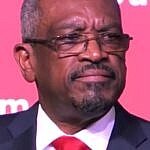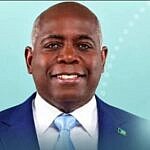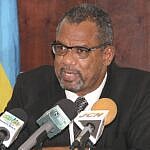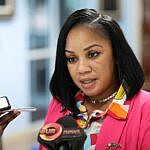





The Bahamas and the United States have been friends, neighbours and partners for generations, cooperating against drugs, organised crime and illegal trafficking. But friendship does not erase borders, and cooperation does not give one nation licence to operate inside another as though its sovereignty were optional.
That principle is at the heart of the controversy over undercover US Drug Enforcement Administration operations in The Bahamas.
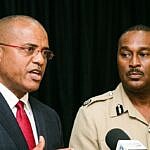
Bahamas Ambassador to the United States Wendall Jones says American agents operated outside established treaties and law-enforcement arrangements, arguing that DEA personnel require Bahamian government or police permission to operate here. US Ambassador Herschel Walker has rejected the controversy as “fake news” while stressing the importance of combating drug trafficking.
The dispute echoes concerns dating back decades. In 1980, Prime Minister Sir Lynden Pindling complained to American officials about DEA activities, including the use of Bahamian residents as informants without adequately informing the Bahamian government and insufficient information-sharing. American officials subsequently sent a delegation to Nassau to address those concerns.
Political allegations have also surrounded former Prime Minister Hubert Ingraham’s contacts with US officials, including claims that he was CIA “Agent 1622.” Publicly available material does not establish that allegation as fact. What is documented is that US diplomatic cables recorded extensive political discussions with Ingraham and his support for US-Bahamas law-enforcement cooperation.
The larger issue, therefore, is not PLP versus FNM. It is sovereignty.
The Bahamas has cooperated extensively with the United States, including through OPBAT, established in 1982. Such cooperation demonstrates why agreed rules matter.
If recent DEA activities had proper Bahamian authorisation, the applicable agreement should be identified. If they did not, Bahamians deserve an explanation.
Drug trafficking and corruption must be confronted, but Bahamian law must govern Bahamian territory. A small country possesses no less sovereignty because its neighbour is a superpower.
The Bahamas should cooperate vigorously with the United States while insisting on one principle: friendship, however valuable, is not permission.
More from LOCAL
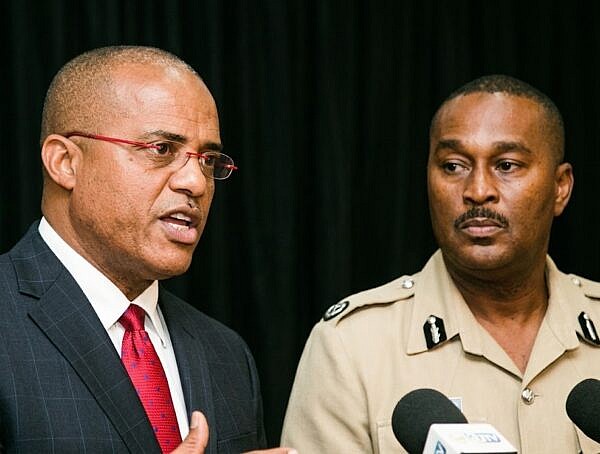
ACP CHASWELL HANNA & FNM MARVIN DAMES VISA REVOKED?
Dr Chaswell A. Hanna Assistant Commissioner of Police School-Based Policing & Training and Former Minister of National Security Marvin Dames …
An RPG Under A Stove — Police Baffled as Illegal Firearms Crackdown Takes Shocking Turn
Police in their quest to crack down on the proliferation of illegal firearms are baffled tonight. In what is perhaps the …
Facing the Mirror of Solidarity
Trade unionism was never designed to be an individual’s personal shield; it is a sacred collective trust built on accountability, …