









Addresing The Urban Renewal and Community Relations “Women Have a Voice Too” Symposium, Assistant Superintendent of Police Kendra Whyms minced no words as she appealed to the many organisations, non-governmental organisations, advocates, churches and agencies working to combat domestic violence in The Bahamas. Her message was timely and necessary: far more can be accomplished when genuinely concerned parties share information, combine efforts and support one another instead of operating in silos.
It is an uncomfortable truth that even within worthy causes, competition can emerge. Organisations may become protective of their programmes, personalities and public profiles. Questions of who gets the credit, who receives recognition, who is invited to speak and whose organisation is seen as leading the charge can sometimes overshadow the very people the movement exists to serve.
Domestic violence is far too serious for that.
While organisations compete for recognition, a woman somewhere may be wondering whether she will survive another night. While individuals argue about who should lead, a mother may be secretly packing a bag, gathering documents and preparing to flee with her children.
For that woman, institutional rivalry is meaningless. She needs help.
She may need the police. She may need emergency shelter. She may require legal assistance, counselling, transportation, financial support, childcare or employment. No single organisation can realistically provide everything every survivor requires.
That is precisely why collaboration matters.
ASP Whyms, speaking from the perspective of law enforcement and advocacy, also acknowledged that the police must continually examine their own response to domestic violence. When victims summon the courage to report abuse, the way they are received can determine whether they continue seeking help or retreat into silence.
Domestic violence cannot be dismissed as “just a domestic.”
Strangulation, beatings, threats with firearms or other weapons and acts that leave victims fearing for their lives are not ordinary relationship disputes. They are serious acts of violence requiring an appropriate response from law enforcement and the wider justice system.
But responsibility extends beyond the police.
Churches and faith leaders must ensure that preserving a marriage never becomes more important than protecting a life. Schools must teach young people that jealousy, control, possessiveness and violence are not expressions of love. Courts and other institutions must recognise the urgency that can accompany domestic violence cases.
And organisations serving victims must build bridges, not walls.
If one organisation provides counselling and another shelter, connect them. If another provides legal assistance, education or financial support, bring it into the network. Share expertise. Share information where appropriate. Support effective initiatives even when someone else receives the recognition.
There is enough work for everyone.
The measure of success should never be whose photograph appears in the newspaper or whose name is printed on a programme. It should be whether victims are safer, whether survivors receive meaningful support and whether young people learn to reject violence before destructive behaviours become normalised.
ASP Whyms’ challenge should therefore resonate nationally: replace competition with collaboration and individual recognition with collective purpose.
When a frightened woman asks for help, the first question should never be who gets the credit.
It should be: How do we protect this life?
The mission must always be greater than the individual.
Because ultimately, combating domestic violence is not about recognition.
It is about lives.
More from LOCAL
ACP CHASWELL HANNA & FNM MARVIN DAMES VISA REVOKED?
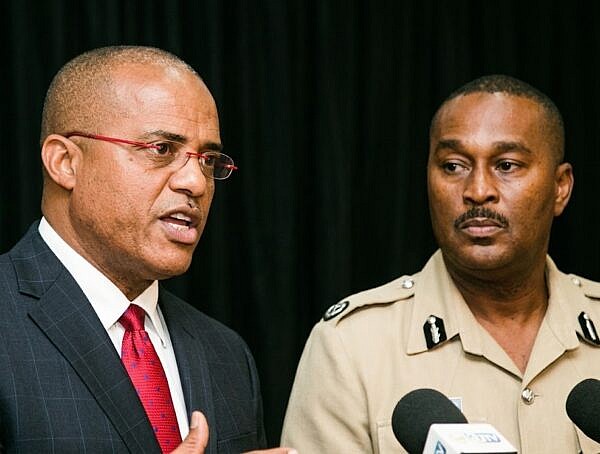
Dr Chaswell A. Hanna Assistant Commissioner of Police School-Based Policing & Training and Former Minister of National Security Marvin Dames …

An RPG Under A Stove — Police Baffled as Illegal Firearms Crackdown Takes Shocking Turn
Police in their quest to crack down on the proliferation of illegal firearms are baffled tonight. In what is perhaps the …
Facing the Mirror of Solidarity
Trade unionism was never designed to be an individual’s personal shield; it is a sacred collective trust built on accountability, …