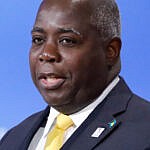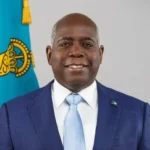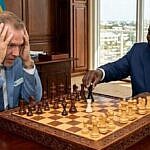









For a man whose professional life as a heart surgeon demands calm judgment and precision under pressure, his political instincts have too often veered into the opposite territory. The disconnect is striking. It raises uncomfortable questions about temperament and decision-making, and it risks bleeding into perceptions of his professional credibility. When someone is expected to embody control, but instead appears impulsive, people begin to reassess everything.
But this latest move goes beyond a lapse in judgment—it borders on political self-sabotage.
In what can only be described as a high-risk gamble, Sands has aligned himself with efforts to sever ties with Hubert Minnis by effectively scrubbing Minnis’s legacy from the Free National Movement’s narrative. That is not just a symbolic act; it is a provocation. And provocations in politics rarely go unanswered.
The backlash may not come in loud protests, but in something far more damaging—silence, withdrawal, and supporters simply staying home on election day.
Politics is supposed to be the art of addition. Yet under Michael Pintard, the FNM appears to be perfecting subtraction. There is a fine line between redefining a party and dismantling its foundation. The treatment of Minnis has crossed that line. What should have been a transition has instead become a public estrangement, and with it, a fracture in party unity that cannot be easily repaired.
The optics have made matters worse. The visible eagerness to erase Minnis from the party’s recent history sends a cold message to the rank and file: loyalty is temporary, and yesterday’s leader can become today’s inconvenience. That perception is toxic in a political movement that depends on deep, personal allegiance at the grassroots level.
And that is where the real damage lies—in the ground game.
Elections are not won in speeches; they are won by committed supporters knocking on doors, organizing communities, and turning out the vote. When those supporters feel that one of their own has been disrespected, their energy fades. Enthusiasm cannot be commanded—it must be inspired. And right now, inspiration is being replaced with hesitation.
The FNM machine, once cohesive and formidable, now feels uncertain. Longtime supporters are watching carefully, adopting a “wait and see” posture as internal tensions play out. That kind of hesitation is often the first sign of electoral trouble.
But the true repercussion—the one that could define the consequences of this miscalculation—lies in what can only be called the “Boxer factor.”
Cyril ‘Boxer’ Minnis is not a peripheral figure who fades quietly into the background. He is driven by a deep sense of loyalty and possesses an instinctive understanding of political realities on the ground. This is where the decision to sideline Minnis transforms from a strategic error into a potentially consequential misfire.
Because this is no longer just about party politics—it is personal.
To underestimate how Cyril “Boxer” Minnis may respond is to misunderstand both the man and the moment. Loyalty, especially when rooted in family and reinforced by political experience, does not dissipate—it mobilizes. Whether through influence, organization, or quiet resistance, the response may not be theatrical, but it could be deeply effective.
And that is the risk Sands and the current leadership now carry.
As the next election approaches, the battleground will not only be between parties, but within the FNM itself. Will Minnis loyalists disengage? Or will they, guided in part by figures like Boxer, demonstrate the real cost of alienating a proven base?
Michael Pintard may have consolidated authority at the top, but political strength is not measured in boardrooms—it is measured in the streets, in turnout, and in loyalty that endures pressure.
In trying to move past the Minnis era, the party risks triggering the very force that could define its setback. Because when a decision disrespects both legacy and loyalty, the response is rarely immediate—but it is almost always decisive.
The bill is coming due.
And Cyril “Boxer” Minnis may well be the one holding the receipt.
Can the FNM afford to lose the Minnis supporters who are in every constituency? Is this a suicide attempt by Pintard to completely destroy the party since he is not getting the blessing of the majority of the FNM? Did Pintard put on his parachute and jump?
More from LOCAL
AGAINST ALL ODDS: SENATOR KENO WONG HITS A HOME RUN ON THE INTERNATIONAL STAGE
Life has a way of throwing curveballs. Some people face one strike, others two, and some find themselves standing at …
FNM CONCLAVE: REVIVAL OR POLITICAL FRATERNIZATION?
THE FNM IS IN QUICKSAND, the more they wiggle, the deeper they sink. The Free National Movement (FNM) is in such …
FREEPORT’S FUTURE AT RISK: IS THERE A HIDDEN AGENDA TO STRIP THE GBPA OF ITS ASSETS?
By Bahamas Herald | Opinion FREEPORT, GRAND BAHAMA — Something appears to be stirring behind the walls of the Grand Bahama …