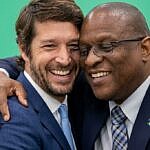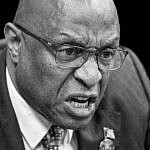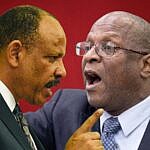




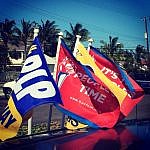



The Free National Movement (FNM) now finds itself confronting a political reality that many Bahamians had already discerned long before any internal polling confirmed it: a steady and undeniable erosion of support. What was once a formidable political force has, under its current leadership, slipped into uncertainty, confusion, and visible disarray.
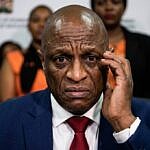
At the centre of this unravelling is Michael Pintard, whose tenure as leader appears increasingly defined not by strategic clarity, but by reactive politics and questionable judgment. The hiring of a new independent pollster seems to have done little more than formalize what the public already feels—that the FNM has “bled” support at a critical moment in its political life. Rather than stabilising the party, this revelation has triggered what many observers describe as erratic behaviour, leaving the organisation directionless and desperate.
More troubling is the perception that the FNM has now fallen behind even emerging political alternatives, including a loosely aligned coalition of independents. This is no small feat; it signals not just dissatisfaction with leadership, but a broader loss of confidence in the party’s ability to represent the Bahamian people effectively.
Pintard’s leadership style has only compounded these challenges. In what seemed to be an effort to distinguish himself from his predecessor, Hubert Minnis, Pintard appeared to publicly distance himself in ways that many supporters found unnecessary and even disrespectful. Instead of projecting unity and continuity, the move created fractures within the party’s base. Leadership transitions often require balance—asserting independence while honouring legacy—, but in this case, the approach has seemingly alienated both traditional supporters and undecided voters.
Equally damaging is the growing perception that Pintard has struggled to embody the temperament of a statesman. Leadership demands composure, clarity, and the ability to rise above political theatrics. Yet critics argue that his approach has at times leaned toward confrontation rather than constructive engagement. Instances where more measured responses were expected have instead been overshadowed by actions that some interpret as heavy-handed or politically opportunistic.
Policy positioning has also raised concerns. Allegations that the FNM has aligned itself with corporate interests—particularly in matters affecting everyday Bahamians, such as rising utility costs—have struck a nerve. For constituents in areas like Marco City, any perception that their interests are secondary to powerful stakeholders is not only politically damaging but deeply personal. Trust, once lost, is difficult to rebuild.
Perhaps most alarming are reports of aggressive tactics by party operatives. Claims that individuals have been harassed or intimidated near parliamentary outposts, if true, point to a troubling shift away from democratic norms. Political engagement should inspire participation, not fear. Such actions risk further alienating voters and reinforcing the narrative of a party in decline.
Meanwhile, the silence—or perceived distance—of party elders speaks volumes. Hubert Ingraham, a towering figure in the FNM’s history, appears to have stepped back from active involvement. Speculation about future leadership, including figures like Duane Sands, only underscores the sense that the party is already looking beyond its current leadership.
The cumulative effect is stark. What was once a dominant political institution now risks becoming a relic of its former self. The FNM’s challenges are not insurmountable, but they require introspection, disciplined leadership, and a recommitment to the principles that once defined the party.
Without that, the current trajectory—marked by internal discord, public distrust, and strategic missteps—may well continue. And if it does, the FNM’s decline will not be sudden, but a slow and visible freefall, unfolding in plain view of a Bahamian electorate that is increasingly ready to move on.
More from LOCAL
WHY ARE YOU SUPPORTING THE PLP
Before casting a vote, every citizen should pause and ask a simple but powerful question: Why am I supporting the …
Garden Hills asking, “Is Rick Fox Unstable & Broke?” Something is not right.
The Fox in the Garden: A Question of Intent or Necessity? The political landscape of The Bahamas is no stranger to …
NO MORE TURNING BACK! LET US MOVE FORWARD TOWARD PROGRESS!!!!
The Case for Continuity: Why The Bahamas Must Break the Cycle of "Stop, Review, and Cancel" Progress is rarely a sprint; …