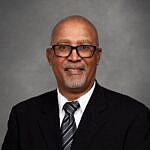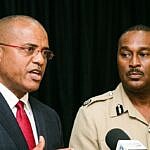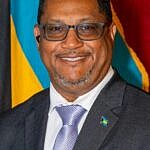






The recently appointed Acting Comptroller of Road Traffic, Kelsie Munroe, has wasted little time demonstrating what kind of regulator he intends to be. Faced with reports that the Bahamas Taxi Cab Union may abandon discussions with the livery industry and amid talk of disruptive industrial action, Munroe did not retreat into bureaucratic language or allow the threat of confrontation to dictate the Government’s posture.
He reached for the law.
That distinction matters. Munroe’s statement was not an attack on the right of taxi drivers to protest, organize or vigorously defend their livelihoods. In fact, he expressly acknowledged stakeholders’ right to voice their concerns and determine their own positions. He even left the door open for the union to return to negotiations.
But his message contained an unmistakable line in the sand: disagreement with the Government does not confer a right to disrupt the country.
Munroe specifically warned against blocking or deliberately impeding roads and access to airports, hotels, cruise ports, tourist attractions and other public facilities. That is particularly significant in The Bahamas, where the movement of visitors between airports, ports, hotels and attractions is integral to the functioning of the tourism economy.
A threat to block a bridge, roadway or major access point cannot therefore be dismissed as ordinary industrial rhetoric. It can affect workers trying to reach their jobs, parents collecting children, emergency vehicles, businesses, visitors, and countless Bahamians who have nothing to do with the dispute.
Munroe’s response was firm because he made clear that the Road Traffic Department is prepared to use the powers available to it.
He pointed directly to the Road Traffic Act, warning that deliberately preventing or interrupting the free flow of traffic, or leaving a vehicle positioned so that it creates an obstruction, can constitute an offence. The possible consequences he identified were equally clear: police intervention, prosecution and penalties under the law.
Then Munroe went further.
For public service drivers, a vehicle is not merely private property. Operating in the public transportation sector comes with licensing responsibilities. Munroe warned that where a public service driver is alleged to have intentionally used a vehicle to cause an obstruction or disturbance, the Department may investigate.
Importantly, he did not threaten arbitrary punishment. He specifically referred to a fair investigation and an opportunity for the driver to be heard. But where misconduct is established, and disciplinary action is warranted, Munroe made clear that a public service licence may be suspended or revoked and that the driver’s eligibility to retain a public service badge may also be affected.
That is where his statement acquires real teeth.
The message to the union and its members is that the Government will negotiate, but not under the threat of paralysis. The Department will listen, but it will not surrender its statutory responsibilities because someone threatens to block a bridge or choke off access to critical infrastructure.
This is precisely the balance that a regulator should strike. Dialogue must remain available. Protest must remain lawful. Due process must be respected. But the travelling public must also be protected.
Munroe has therefore established an important principle right out of the gate: possession of a public service licence carries both privileges and responsibilities.
Taxi drivers have every right to fight for what they believe is fair. The livery industry has the same right. Government has an obligation to hear both sides.
But nobody has the right to hold the Bahamian public hostage.
Munroe’s opening stance suggests that while his door is open for discussion, the law will remain firmly on the table.
More from LOCAL
AGAINST ALL ODDS: SENATOR KENO WONG HITS A HOME RUN ON THE INTERNATIONAL STAGE

Life has a way of throwing curveballs. Some people face one strike, others two, and some find themselves standing at …

FNM CONCLAVE: REVIVAL OR POLITICAL FRATERNIZATION?
THE FNM IS IN QUICKSAND, the more they wiggle, the deeper they sink. The Free National Movement (FNM) is in such …
FREEPORT’S FUTURE AT RISK: IS THERE A HIDDEN AGENDA TO STRIP THE GBPA OF ITS ASSETS?
By Bahamas Herald | Opinion FREEPORT, GRAND BAHAMA — Something appears to be stirring behind the walls of the Grand Bahama …