




The claim that the Progressive Liberal Party and the Free National Movement are “the same” collapses under even modest scrutiny. It’s a convenient line, but not a serious one. Political parties are not defined by the occasional defector who switches jerseys; that’s a feature of every democracy. The real measure is policy, priorities, and philosophy—the consistent thread that runs through decisions over time. By that standard, the Progressive Liberal Party (PLP) has carved out a distinct and consequential legacy in The Bahamas.
At its core, the PLP’s philosophy has been disarmingly clear: governance must centre on people, especially those most vulnerable. That is not a rhetorical flourish—it is a governing principle that has translated into institutions, infrastructure, and opportunities that did not previously exist. While critics reduce politics to personalities, the PLP has historically focused on building systems.
Consider the creation of the National Insurance Board (NIB), a cornerstone of social protection in The Bahamas. NIB did not emerge from abstract theory; it was a deliberate intervention to ensure that workers—ordinary Bahamians—would not face old age, illness, or hardship without a safety net. That is philosophy made tangible.
The same can be said for education. The expansion of public secondary education and the establishment of the College of The Bahamas, now the University of The Bahamas, reflect a long-term commitment to upward mobility. These were not cosmetic initiatives; they fundamentally altered access to opportunity. A country that invests in education is making a statement about who gets to participate in its future.
Importantly, the PLP has never treated success as a one-size-fits-all academic pathway. The establishment of the Bahamas Technical and Vocational Institute (BTVI) and the National Training Agency (NTA) recognized a simple truth: talent comes in many forms. By investing in technical and vocational training, the PLP expanded the definition of national contribution—giving dignity and economic value to skilled trades and practical expertise. That is not just social policy; it is economic strategy.
Housing policy offers another clear example of philosophical consistency. The development of affordable communities such as Yellow Elder and Elizabeth Estates was not accidental. It reflected an understanding that stability begins at home—that ownership, security, and community are foundational to national development. These initiatives were about more than structures; they were about social cohesion.
Even in areas like national security and agriculture, the PLP’s imprint is unmistakable. The Royal Bahamas Defence Force strengthened sovereignty and maritime protection. Institutions like BAMSI signalled a commitment to food security and economic diversification. The Bahamas Mortgage Corporation and the Bank of The Bahamas expanded access to financing, enabling more citizens to participate in economic life.
Taken together, these initiatives reveal a pattern: the PLP builds institutions that widen participation, reduce vulnerability, and create pathways to self-reliance. This is not incidental; it is philosophical.
Taken together, these initiatives reveal a pattern: the PLP builds institutions that widen participation, reduce vulnerability, and create pathways to self-reliance. This is not incidental; it is philosophical.
So when someone says the PLP and FNM are the same, the question practically asks itself: based on what? Personnel overlap is not identity. Individuals may move between parties, but institutions do not build themselves, and philosophies do not emerge by accident. The distinguishing line is whether a party consistently prioritises social infrastructure and inclusive development, or approaches governance from a different set of assumptions.
The PLP’s record suggests a deliberate effort to balance growth with equity—to reduce poverty not by ignoring it, but by addressing it systematically. There is also an acknowledgement, rooted in both moral reasoning and practical governance, that a society is judged by how it treats its most vulnerable. That belief has shaped policy decisions in ways that are visible, measurable, and enduring.
Reasonable people can debate outcomes, implementation, or efficiency. That is the nature of democracy. But to argue that there is no difference at all is to ignore decades of institutional development and policy direction. The evidence is not abstract—it is embedded in the very fabric of Bahamian society.
In the end, political identity is not about who stands on the stage; it is about what gets built, who benefits, and what values guide those choices. By that measure, the Progressive Liberal Party has defined itself clearly—and differently.
The only thing that the FNM is successful with is protecting the status quo.
More from LOCAL
AGAINST ALL ODDS: SENATOR KENO WONG HITS A HOME RUN ON THE INTERNATIONAL STAGE
Life has a way of throwing curveballs. Some people face one strike, others two, and some find themselves standing at …
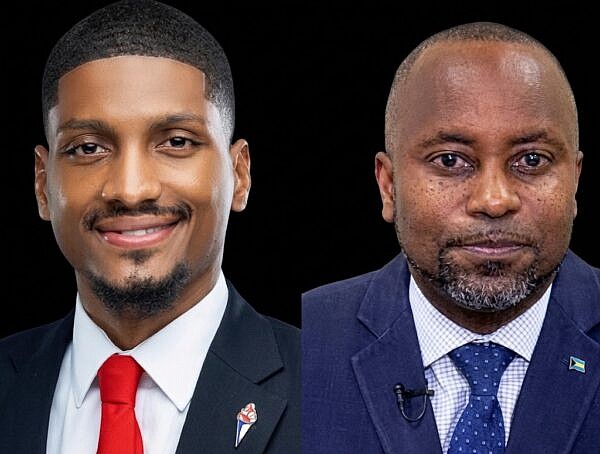
FNM CONCLAVE: REVIVAL OR POLITICAL FRATERNIZATION?
THE FNM IS IN QUICKSAND, the more they wiggle, the deeper they sink. The Free National Movement (FNM) is in such …
FREEPORT’S FUTURE AT RISK: IS THERE A HIDDEN AGENDA TO STRIP THE GBPA OF ITS ASSETS?
By Bahamas Herald | Opinion FREEPORT, GRAND BAHAMA — Something appears to be stirring behind the walls of the Grand Bahama …