





Selective amnesia is a dangerous disease in Bahamian politics. Many of us believe that if we refuse to discuss an uncomfortable subject, it will eventually sink beneath the “sea of forgetfulness”. We complain bitterly when the shoe is on the other foot, yet somehow cannot summon the courage to confess our own political sins.
We are a people who ask questions, receive evasive answers, and eventually move on. Meanwhile, those entrusted with providing explanations bury their collective heads in the sand, apparently confident that public outrage has an expiration date.
But how should we measure political wrongdoing? By the dollar value involved? By the identity of the alleged offender? Or by the political party whose colours the accused happens to wear?
Let us revisit two controversial chapters of the Hubert Ingraham administration: the sale of the Bahamas Telecommunications Company (BTC), formerly Batelco, and the New Providence Road Improvement Project.
THE BTC SALE: WHO REALLY GOT THE BETTER DEAL?
In 2011, the Ingraham-led Free National Movement government sold 51 per cent of BTC to Cable & Wireless Communications for $210 million, surrendering majority ownership and management control of a strategic national asset.
For many Bahamians, this was not merely a commercial transaction. It was the transfer of controlling interest in an enterprise built over generations with public resources, public investment and the sweat of Bahamian workers.
The fundamental question remains: Did the Bahamian people receive fair value for what they surrendered?
Critics believed BTC’s long-term earning potential, infrastructure, customer base and strategic importance justified a substantially higher valuation. The government maintained that privatisation would improve telecommunications services, encourage investment and prepare the industry for competition.
But political assurances are not substitutes for financial accountability.
The transaction also raised questions about BTC’s cash reserves. The agreement contemplated the company retaining $15 million in net cash, subject to adjustments. Those arrangements deserve examination, particularly because the public had every right to understand precisely what financial resources accompanied the transfer of control.
And what of the political explanations offered at the time?
Former Minister of State for Finance Zhivargo Laing was among the defenders of the government’s position. Yet no amount of political arithmetic can erase the fundamental distinction between 51 per cent and 49 per cent.
Fifty-one per cent represents majority ownership. Forty-nine per cent does not.
The Bahamian people were entitled to an explanation that respected their intelligence, not one that seemed to minimise the significance of surrendering majority control.
There have been sweeping accusations that hundreds of millions have supposedly disappeared. Such allegations cannot responsibly be declared proven without evidence. Nevertheless, the demand for a complete accounting of the transaction, its proceeds, associated cash balances and their eventual application is entirely legitimate.
If every dollar was properly received and accounted for, produce the records and settle the matter.
THE ROAD IMPROVEMENT PROJECT: HOW MUCH WAS TOO MUCH?
Then came the New Providence Road Improvement Project, another controversy that left taxpayers questioning how public money was managed.
The project was supposed to modernise the island’s road network, improve drainage and relieve traffic congestion. Instead, it became synonymous with prolonged disruption, public frustration and escalating costs.
Contemporary public criticism identified cost overruns exceeding $100 million.
How could a major infrastructure programme experience such substantial additional expenditure? Were the original estimates realistic? Were foreseeable risks properly assessed? What changes were authorised, who approved them, and what independent scrutiny accompanied those decisions?
These are not unreasonable questions. They are the minimum questions that any responsible government should welcome.
Even where unforeseen underground utilities, engineering complications or design changes legitimately increase construction costs, the public deserves a detailed reconciliation of original budgets, revised contracts and final payments.
A prime minister’s confidence, however forcefully expressed, is not an audit.
Hubert Ingraham’s reputation as a commanding political leader cannot place decisions made under his administration beyond examination. Leadership is not ownership of the public treasury, and political authority must never be confused with immunity from scrutiny.
Equally troubling is the apparent absence of meaningful public dissent from senior political colleagues.
Where were the independent voices within Cabinet? Where were those prepared to challenge decisions, demand explanations and insist that taxpayers receive demonstrable value for money?
Loyalty to a political leader must never supersede loyalty to the Bahamian people.
CARLISLE BETHEL, THE FNM AND THE UNANSWERED QUESTIONS
Carlisle Bethel and other senior figures associated with the FNM should be prepared to defend their administration’s record with documents, figures, and verifiable explanations.
Not slogans. Not political insults. Not the convenient excuse that these matters happened years ago.
The public deserves a transparent accounting of the BTC proceeds and a comprehensive explanation of the road project’s cost increases.
This is not a declaration that any named individual stole public funds. It demands that those who exercised political authority explain how public assets were sold, and public money was spent.
The same standard must apply to everyone.
THE FINAL VERDICT
The greatest enemy of accountability is not necessarily corruption itself. It is the collective willingness to forget, excuse or rationalise questionable decisions when they involve our preferred political party.
The Bahamas cannot build a culture of integrity upon selective outrage.
If there was wrongdoing, expose it. If there was mismanagement, acknowledge it. If the decisions were justified, produce the evidence.
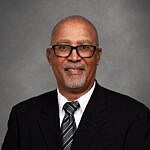
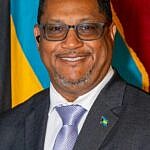
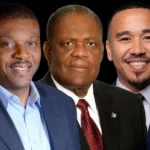
Hubert Ingraham, Zhivargo Laing, Carlisle Bethel, and the former FNM leadership should have no objection to an informed public examining their record.
After all, the money belonged to the Bahamian people.
And the Bahamian people have every right to demand answers, however many years have passed.
More from LOCAL
The FNM Sandbox: A Party Built on Borrowed Loyalty and Now Buried in Its Own Sand
The Free National Movement finds itself in an unenviable position, trapped between its troubled origins and an uncertain future. Its …
BREAKING NEWS: Prime Minister Davis to reshuffle Cabinet in the New Year

The Prime Minister is set to reshuffle the Cabinet in the new year, bringing changes to the government’s ministerial line-up …
THE PAC IS NOT PINTARD’S PLAYGROUND: STOP THE GRANDSTANDING AND LET THE FACTS SPEAK
The Public Accounts Committee (PAC) is one of Parliament’s most important accountability instruments. It scrutinises public expenditure, examines the evidence, …