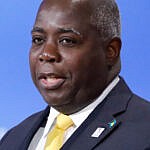









The phrase “opening a can of worms” is often used loosely in political discourse, but in this case, Marlon Johnson may have done precisely that—whether by design or by miscalculation. In his apparent zeal to cast doubt on the present administration, Johnson has ventured into territory that inadvertently draws renewed attention to matters many believed were quietly shelved. But here is the crux of the issue: if Johnson intends to play the role of the moral arbiter on fiscal overspend, he must first reckon with the fact that he is standing in a house made of the thinnest glass.
Central to this unfolding narrative is the mention of Shanendon Cartwright, the former Chairman of Roads and Parks. At the time when concerns first surfaced regarding his tenure, there were indeed enough irregularities—procedural gaps and administrative inconsistencies—to justify a formal investigation. Public accountability demands scrutiny where public resources and trust intersect. Yet, as Johnson attempts to point to “unusual” spending today, he conveniently suffers from a bout of selective amnesia about the outcomes of those very investigations.
The Double-Edged Sword of Accountability
If there was “overspend” as Johnson suggests, he must be careful with his math. In the complex machinery of governance, fiscal patterns do not emerge in a vacuum. To suggest that one side is uniquely guilty of administrative bloat while ignoring the “procedural gaps” of his own colleagues is not only disingenuous—it is fundamentally dishonest. If the investigation into Cartwright was concluded and exonerated him, that conclusion deserves to be stated unequivocally. However, if that matter remains in the all-too-familiar grey area of “incomplete,” then Johnson is essentially weaponizing unresolved ghosts. He cannot “fix his mouth” to mention corruption when his own camp has yet to provide clarity on its own historical baggage.
The public deserves honesty, not selective recollection. Transparency delayed is trust denied.
A Shared Responsibility
The reality of governance is often less about “good guys” and “bad guys” and more about systemic habits. If there is a culture of overspend, it is a beast that both sides of the aisle have fed at different intervals. For the Opposition to now act as though they discovered the concept of fiscal responsibility yesterday is a leap of logic the public is unlikely to take.
By reviving these dormant issues without providing context, Johnson hasn’t strengthened the case for transparency; he has muddied it. He has effectively revived a dormant issue that forces us to ask: Is Cartwright truly “out of the woods,” or is there unfinished business that the Opposition would prefer we forget?
The Price of Insinuation
Political narratives that rely on insinuation rather than substantiated fact risk eroding public confidence in the very systems designed to ensure accountability. Johnson’s intervention places an obligation on him to speak plainly. You cannot point a finger at a current “can of worms” while holding a lidless jar of your own.
Until the Opposition can account for the “procedural gaps” of its own chairmen with the same fervour it uses to attack the present administration, their cries of corruption will continue to sound like nothing more than hollow political theatre. If both sides are guilty of the same administrative drift, then the “unusual” patterns Johnson sees are merely reflections in a mirror he refuses to look into.
More from LOCAL

AGAINST ALL ODDS: SENATOR KENO WONG HITS A HOME RUN ON THE INTERNATIONAL STAGE
Life has a way of throwing curveballs. Some people face one strike, others two, and some find themselves standing at …

FNM CONCLAVE: REVIVAL OR POLITICAL FRATERNIZATION?
THE FNM IS IN QUICKSAND, the more they wiggle, the deeper they sink. The Free National Movement (FNM) is in such …
FREEPORT’S FUTURE AT RISK: IS THERE A HIDDEN AGENDA TO STRIP THE GBPA OF ITS ASSETS?
By Bahamas Herald | Opinion FREEPORT, GRAND BAHAMA — Something appears to be stirring behind the walls of the Grand Bahama …