







Constant Confrontation, Political Bitterness and the Need for a More Constructive Opposition
There comes a time in the life of every political organisation when its members must examine not only what they are saying, but how they are saying it. The Free National Movement (FNM) has reached such a moment. Its challenge is not simply to criticise the government, but to demonstrate that its criticism serves a constructive national purpose.
The FNM won just eight of the 41 seats contested in the May 2026 general election. That result demands serious reflection. Yet the continuing public disagreements and confrontational political exchanges raise an important question: Is the party learning the lessons of defeat, or allowing political hostility to overshadow its rebuilding efforts?
Michael Pintard, Adrian White and Dr André Rollins are prominent voices within the parliamentary opposition. Each has a responsibility to scrutinise the government, challenge questionable decisions and defend the public interest. However, there is an important difference between principled opposition and appearing to oppose simply for opposition’s sake.
A political party cannot rebuild public confidence through criticism alone.
When every government announcement becomes another occasion for confrontation, citizens may begin to wonder whether their representatives are more interested in political combat than national progress.
This does not mean the opposition should remain silent when the government makes mistakes. Quite the contrary. Democracy requires a vigilant opposition prepared to expose wrongdoing, question expenditure and demand accountability.
But democracy also requires honesty, fairness and the maturity to acknowledge good decisions, regardless of which political party makes them.
If the Progressive Liberal Party government introduces a programme that genuinely improves healthcare, education, employment or the cost of living, why should the FNM find it difficult to acknowledge that benefit?
Surely, saying that a government initiative is good for Bahamians does not amount to political surrender. It demonstrates independence of thought.
The concerns surrounding the FNM extend beyond parliamentary exchanges. Public reports of disagreements over leadership, strategy and the findings of the party’s post-election review illustrate the difficulties involved in rebuilding a political organisation after defeat.
Dr Rollins has publicly maintained that he supports Mr Pintard, despite reported disagreements. Mr Pintard has also spoken about the need for the party to listen, evolve and improve. These are important commitments. The challenge is translating such declarations into conduct that strengthens public confidence.
Adrian White, like his parliamentary colleagues, must also consider how the tone of opposition contributions affects the wider perception of the party.
Political disagreement is necessary. Perpetual political hostility is not.
There is another lesson that deserves attention: none of us is without fault.
Every political organisation has made mistakes. Every administration has experienced failures. Every political leader has said or done something that, with hindsight, might have been handled differently.
Why, then, should politicians behave as though mistakes are exclusive to their opponents?
A little humility would improve the quality of political debate considerably.
The FNM’s post-election discussions have included concerns about reconnecting with members, improving communication and rebuilding public confidence. These are legitimate organisational challenges, but they cannot be addressed by rhetoric alone.
Supporters need reasons to remain involved. Citizens need to hear practical alternatives. Younger Bahamians deserve political conversations that offer hope rather than endless recrimination.
The responsibility does not rest exclusively with the FNM. The governing PLP must also accept criticism without automatically treating disagreement as hostility. Both sides must recognise that the national interest is larger than party loyalty.
The Bahamas needs political representatives capable of disagreeing firmly while remaining respectful, acknowledging mistakes and recognising achievements wherever they occur.
Mr Pintard, Mr White and Dr Rollins have an opportunity to demonstrate that opposition politics can be vigorous without becoming unnecessarily antagonistic. The same standard should apply to every parliamentarian.
The essential question is whether political leaders can rise above the temptation to turn every issue into a partisan battle.
Democracy is strengthened when politicians put country before party, substance before spectacle and solutions before insults.
The FNM’s future direction is ultimately a matter for its members and the Bahamian electorate. But the wider lesson belongs to all of us: political credibility is built through consistency, fairness, humility and constructive service.
Someone within the party should recognise the wisdom of that principle.
For in politics, as in life, there is little benefit in continually digging a hole when the real task is to build a bridge.
More from LOCAL
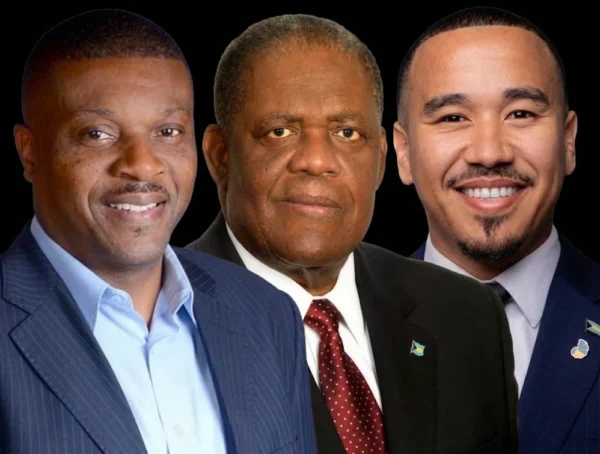
SELECTIVE AMNESIA: THE BTC SALE, THE ROADWORKS AND THE QUESTIONS THAT REFUSE TO DIE
Selective amnesia is a dangerous disease in Bahamian politics. Many of us believe that if we refuse to discuss an …

The FNM Sandbox: A Party Built on Borrowed Loyalty and Now Buried in Its Own Sand
The Free National Movement finds itself in an unenviable position, trapped between its troubled origins and an uncertain future. Its …
BREAKING NEWS: Prime Minister Davis to reshuffle Cabinet in the New Year

The Prime Minister is set to reshuffle the Cabinet in the new year, bringing changes to the government’s ministerial line-up …