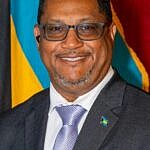








In industrial relations, tone matters—but outcomes matter more. Under the leadership of the Progressive Liberal Party (PLP), and guided by the steady, deliberate hand of Pia Glover-Rolle, the government has sought to redefine its relationship with workers across The Bahamas. The promise was simple but ambitious: to replace confrontation with cooperation and hostility with harmony. For many, that pledge was met with scepticism. Today, the results are becoming harder to ignore.
For years, labour relations in the country were defined by friction. Negotiations were often tense, drawn-out, and, at times, disrespectful. It was not uncommon for discussions to collapse into industrial action—walkouts, work-to-rule campaigns, sickouts, or full strikes. Workers grew accustomed to bracing for conflict rather than expecting resolution. Trust between unions and the government was, at best, fragile.
The Davis administration approached this reality with a different philosophy. Minister Glover-Rolle emphasized dignity, respect, and consistent engagement, travelling across the islands and meeting unions where they were. The goal was not simply to settle disputes, but to build relationships. It was a shift in posture—from adversary to partner.
The most recent example, the landmark agreement between the Bahamas Public Sector & Health Professionals Union and the Airport Authority, valued at over $10 million, stands as a powerful symbol of this new approach. It demonstrates that when dialogue is genuine and sustained, meaningful outcomes are possible. More importantly, it reinforces the idea that workers are not an afterthought, but a priority.
Yet this agreement is only one piece of a much larger picture. The government has successfully concluded a remarkable number of agreements across nearly every sector of the public service and national economy. In education, unions such as the Bahamas Union of Teachers, the Bahamas Educators, Counsellors & Allied Workers Union, and the Bahamas Educators & Managerial Union have all reached terms with the government, addressing longstanding concerns and strengthening the foundation of the nation’s school system.
Healthcare workers, often at the frontline of national crises, have also seen significant progress. The Bahamas Nurses Union and the Bahamas Doctors Union have secured agreements with both the Public Hospitals Authority and the government, as well as arrangements with consultants and physicians. These agreements are not merely contractual—they are essential to maintaining morale and stability in a critical sector.
The reach of these agreements extends even further. Public officers and managers, represented by groups such as the Bahamas Public Services Union and the Public Managers Union, have concluded deals with key institutions, including the National Insurance Board, the University of The Bahamas, the Gaming Board, and the Mortgage Corporation. This breadth signals a government-wide commitment to engagement rather than selective negotiation.
Strategic industries have not been overlooked. Aviation and tourism workers—through the Airport, Airline & Allied Workers Union and the Bahamas Airline Pilots Association—have reached agreements with Bahamasair, Nassau Flight Services, and the Airport Authority. Meanwhile, utility workers at the Water & Sewerage Corporation and Bahamas Power & Light have also secured terms, ensuring continuity in essential services that affect every Bahamian household.
Even specialized sectors, such as air traffic controllers, central bank employees, and tertiary educators, have been brought into this framework of dialogue and agreement. The consistency across these 40-plus agreements suggests more than coincidence—it reflects a deliberate and sustained policy direction.
Of course, no government can claim perfection. Agreements must be implemented effectively, and commitments must be honoured over time. Workers will ultimately judge success not only by what is signed, but by what is delivered. Still, it would be disingenuous to dismiss the scale of progress achieved.
What is unfolding is a recalibration of labour relations in The Bahamas. The era of routine industrial conflict appears, at least for now, to be giving way to one of structured engagement. Workers who once expected confrontation are now seeing evidence of cooperation.
In the final analysis, the PLP’s approach—anchored by Minister Glover-Rolle’s emphasis on respect and dialogue—has begun to yield tangible dividends. The volume and diversity of agreements reached across unions and institutions point to a government intent on keeping its promise. For many Bahamians, that promise translates into something deeply practical: the ability to rest a little easier at night, knowing that their voices are being heard and their contributions valued.
PLP ARE FRIENDS WITH LABOUR!
More from LOCAL
AGAINST ALL ODDS: SENATOR KENO WONG HITS A HOME RUN ON THE INTERNATIONAL STAGE
Life has a way of throwing curveballs. Some people face one strike, others two, and some find themselves standing at …

FNM CONCLAVE: REVIVAL OR POLITICAL FRATERNIZATION?
THE FNM IS IN QUICKSAND, the more they wiggle, the deeper they sink. The Free National Movement (FNM) is in such …

FREEPORT’S FUTURE AT RISK: IS THERE A HIDDEN AGENDA TO STRIP THE GBPA OF ITS ASSETS?
By Bahamas Herald | Opinion FREEPORT, GRAND BAHAMA — Something appears to be stirring behind the walls of the Grand Bahama …