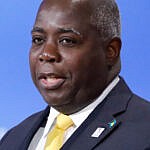









The Bahamian people have long been subjected to a peculiar brand of political theatre: the “Epiphany of the Former Official.” This is the phenomenon where individuals who once held the levers of power suddenly discover the virtues of transparency, the necessity of audits, and the gravity of fiscal discipline—but only after they have vacated their high offices.
The latest performance in this genre comes from former Financial Secretary Marlon Johnson. Mr Johnson has recently taken to the public square to posture as a champion of accountability regarding the Bahamas Public Parks and Public Beaches Authority. While the call for transparency is always welcome, the source of this particular demand necessitates a serious reality check.
Accountability is not a cloak one dons when it is politically fashionable; it is a standard that must be maintained when one is actually in the position to enforce it.
The Architect vs The Critic
Mr Johnson’s recent commentary on the Authority’s spending is not just selective; it is deeply disingenuous. He speaks today as if he were a bewildered outsider looking in at a broken system. The reality is far different. As the former Financial Secretary, Mr Johnson was not a bystander to the machinery of government finance; he was its chief mechanic.
If Mr Johnson is now demanding audits, quarterly reports, and annual disclosures, the public is entitled to ask: Where was that same urgency when he sat at the desk where the checks were signed?
The facts, which remain on the public record, are stubborn things:
• The Parks and Beaches Authority repeatedly exceeded its approved budget during Mr Johnson’s tenure.
• The Authority consistently received supplemental funding beyond budgeted amounts across multiple fiscal years under his watch.
• This period was marked by well-documented governance weaknesses, including a lack of consistent audited financial reporting and internal oversight.
To condemn overspending in 2026 while pretending not to understand how supplemental funding, public finance approvals, and state-agency oversight functioned during his own term is an insult to the intelligence of the Bahamian public.
A Structural Legacy
Let us be clear: overspending at the Parks and Beaches Authority did not begin with the current administration. It is a structural issue that has plagued various governments for years. However, by framing these challenges as unique to the present day, Mr Johnson is attempting to rewrite history to suit a specific narrative.
You cannot demand accountability today while pretending you had no responsibility yesterday. When the Authority was overrunning its budget year after year, what corrective actions did the Financial Secretary push for? Which audits were delivered? Which reforms were implemented to stem the tide of unauthorized spending?
If the answers to these questions are “none” or “not enough,” then his current outrage is not a matter of principle—it is a matter of convenience.
The Danger of Selective Outrage
The danger of Mr Johnson’s approach is that it cheapens the very concept of transparency. When accountability is used as a political weapon rather than a governing standard, the public loses trust in the process.
No administration—including the current one—should be above scrutiny. No public body should be allowed to spend without proper reporting. The call for audits and disclosure is correct, but it must be applied consistently. We cannot have a national conversation about the Parks and Beaches Authority that ignores the era in which the current problems took root and flourished.
Questions That Require Answers
If Mr Johnson wants the country to take his critiques seriously, he must first address his own record. Before asking if the current administration’s “hands are clean,” he should explain why, during his time as the nation’s most senior public finance official, the following occurred:
1. Refusal to Account: Why were there reported incidents where information was withheld, or compliance was delayed regarding the Authority’s finances?
2. The Silence of the Audits: Why is the demand for audited reports so loud now, when they were so quiet then?
3. The Supplemental Loophole: Why was the system of supplemental funding allowed to become a recurring back door for overspending without the very “oversight” he now claims is missing?
Marlin Johnson must have bit his tongue!
The Bahamian people are tired of the routine where insiders become “principled” only after they lose their proximity to power. Public trust is not built by pretending that yesterday’s failures occurred in a vacuum.
If we are to have a real national conversation about fiscal responsibility, it must be a full one. It must include the failures of the past as well as the requirements of the present. Marlon Johnson cannot speak as though he has just discovered the concept of public finance. He helped build the system we have; he should not be surprised that it functions exactly as he left it.
Transparency is not a campaign line, and accountability is not a talking point. It is time for a dialogue that values facts over politically convenient outrage. The country deserves nothing less.
More from LOCAL

AGAINST ALL ODDS: SENATOR KENO WONG HITS A HOME RUN ON THE INTERNATIONAL STAGE
Life has a way of throwing curveballs. Some people face one strike, others two, and some find themselves standing at …

FNM CONCLAVE: REVIVAL OR POLITICAL FRATERNIZATION?
THE FNM IS IN QUICKSAND, the more they wiggle, the deeper they sink. The Free National Movement (FNM) is in such …

FREEPORT’S FUTURE AT RISK: IS THERE A HIDDEN AGENDA TO STRIP THE GBPA OF ITS ASSETS?
By Bahamas Herald | Opinion FREEPORT, GRAND BAHAMA — Something appears to be stirring behind the walls of the Grand Bahama …