




For years, the people of Grand Bahama have lived in a state of quiet vigilance and justified anxiety. They have endured the lingering scars of unprecedented natural disasters and watched once-vibrant hubs fall silent. The sight of the shuttered Grand Lucayan Hotel, a silent giant dark since Hurricane Matthew in 2016, served as a daily reminder of economic stagnation. Meanwhile, the memory of Hurricane Dorian’s 2019 storm surge swallowing the international airport remained etched in the island’s collective memory. For many Grand Bahamians, promises of relief and redevelopment had come to feel like distant echoes.
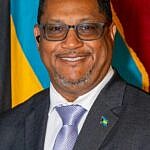
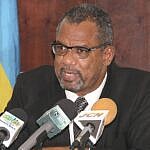
In a decisive address, Prime Minister Philip Davis confronted this apprehension head-on. Rather than offering empty assurances or glossing over past struggles, Davis acknowledged the community’s sacrifices and laid out a transparent, detailed blueprint for Grand Bahama’s future. By outlining concrete timelines, massive capital investments, and a balanced vision of public-private partnerships, the Prime Minister moved to transform long-standing anxiety into tangible hope.
Addressing the island’s three major priorities, the airport, the harbour, and the Grand Lucayan Hotel, Davis centred his vision around resilience, economic opportunity, and human dignity.
First, he tackled the airport, a critical lifeline whose staff famously kept operations running out of their own cars and under temporary tents following Dorian. Acknowledging that Grand Bahamians are owed deep gratitude for their perseverance, Davis introduced a future-proof solution. A new international terminal, designed to stand 23.5 feet above sea level, well above Dorian’s surge and the hundred-year storm standard, is currently in development, complete with U.S. Customs pre-clearance provisions and a comprehensive flood mitigation plan. With concept designs wrapping up and construction scheduled to begin before April 2027 toward an early 2029 completion, alongside $8.6 million in ongoing airfield repairs, the government is delivering a resilient asset designed to endure.
Second, the Prime Minister highlighted the transforming landscape of Freeport Harbour. A massive $400 million investment by MSC is set to establish a modern cruise terminal capable of berthing up to six of the world’s largest cruise ships. This program, encompassing upgrades to the Old Harbour, a new terminal at Billy Cay, and a dedicated beach club, proposes bringing up to 20,000 visitors daily, spending over $300 million annually onshore. Crucially, Davis addressed the public’s need for transparency by highlighting an upcoming public consultation process on November 2nd, ensuring the community remains an active participant in this expansion.
Third, Davis confronted the long-standing scar of the Grand Lucayan Hotel. Acknowledging that Bahamians have carried the financial burden of the resort since the government purchased it in 2018, he announced that demolition and redevelopment are finally underway. Concord Wilshire and MSC’s CTL Maritime are reimagining the area into a multi-faceted destination featuring a 20-acre beachfront club, a hotel and casino resort, a mega-yacht marina, and a championship golf course. Crucially, Davis spoke directly to the workers who weathered the resort’s hardest years, assuring them that their experience will be valued as jobs return.
To reinforce that progress extends beyond tourism and commerce, Davis pointed to the steady advancement of the Freeport Health Campus. Designed to expand access to modern healthcare and house a nurse training academy, construction reached approximately 30 per cent completion by September, with foundations set and the superstructure in place ahead of its targeted 2027 opening.
Throughout his address, Prime Minister Davis established a clear baseline metric: “Who benefits?” By ensuring that mega-projects directly empower local straw vendors, artisans, taxi drivers, and tour operators, the administration is weaving the local workforce directly into the island’s recovery.
Ultimately, Davis framed these initiatives not as isolated ventures, but as a deliberate synergy between public duty and private enterprise. By pairing resilient public infrastructure like the airport and healthcare campus with transformative private developments, the administration is replacing years of uncertainty with a structured, accountable roadmap. For Grand Bahama, the era of waiting is giving way to an era of measured, sustainable growth.
More from LOCAL
BREAKING NEWS: Prime Minister Davis to reshuffle Cabinet in the New Year

The Prime Minister is set to reshuffle the Cabinet in the new year, bringing changes to the government’s ministerial line-up …

THE PAC IS NOT PINTARD’S PLAYGROUND: STOP THE GRANDSTANDING AND LET THE FACTS SPEAK
The Public Accounts Committee (PAC) is one of Parliament’s most important accountability instruments. It scrutinises public expenditure, examines the evidence, …
Building the Future on Bold Realities: Reflections on Senator Jerome Fitzgerald’s Address at Breezes
Addressing a packed, enthusiastic room of supporters at the Killarney Branch meeting at the Breezes Hotel, Senator Jerome Fitzgerald delivered …