







By refusing to confront its leadership crisis, alienating its supporters, and letting personal ambitions overshadow party unity, the Free National Movement risks becoming the architect of its own political destruction.
Every political organisation reaches a point when the greatest threat to its survival is no longer the party across the parliamentary aisle, but the people in its own leadership offices. For the Free National Movement (FNM), that time may have arrived.
The FNM has dug itself a hole, and rather than finding a ladder out, it seems determined to keep digging.
For too long, the party has played the proverbial ostrich, burying its head in the sand while serious questions about its leadership, direction and political judgment have gone unanswered. What began as internal dissatisfaction now threatens to become a full-blown crisis of confidence.
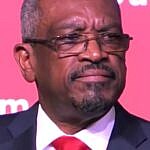
At the centre of this political storm stands Michael Pintard, whose combative leadership style has arguably alienated more of the party’s traditional base than he may ever care to acknowledge.
Leadership is not merely about occupying the highest office, controlling the machinery or outmanoeuvring perceived rivals. It is about building consensus, inspiring confidence and understanding that no political leader is bigger than the organization he serves.
Pintard’s critics would argue that he has confused control with leadership and loyalty with unquestioning obedience.
The ongoing speculation about importing an outsider to rescue the FNM is particularly revealing. What message does that send to hardworking members who have sacrificed years building the party? Are they now being told that nobody within their ranks is sufficiently capable, trustworthy or politically attractive to lead?
That suggestion alone is enough to deepen resentment among the faithful.
Then there is the question of Shannendon Cartwright.
Whether Cartwright has been politically outmanoeuvred, deliberately marginalized or has chosen to remain strategically quiet is open to interpretation. What cannot be dismissed is that he has cultivated relationships, built a following, and maintained a presence within the organisation.
Some believe he has remained behind the scenes for far too long. Others argue that revealing his ambitions prematurely would only expose him to the political machinery determined to preserve the status quo.
But ignoring Cartwright’s supporters does not make them disappear. It merely creates another fracture in an already weakened foundation.
Meanwhile, disillusioned FNMs have privately said the party needs nothing less than a complete rebuild. Their frustration centres on the perception that Pintard cares more about protecting his position than embracing the collective leadership needed to restore the party’s fortunes.
It is the political equivalent of throwing out the baby with the bathwater.
The old guard, including Hubert Ingraham, Tommy Turnquest, Brent Symonette, Maurice Moore, C.A. Smith, and others, has gone stale; no one really cares about their opinion.
Former prime minister Ingraham, rather than calming troubled waters, appears to have revived old divisions and uncomfortable memories. Ingraham remains a partially influential political figure, particularly among established financial supporters, but influence does not automatically translate into popular enthusiasm.
Many FNMs are weary of yesterday’s political personalities continually attempting to determine tomorrow’s leadership.
The party cannot credibly promise renewal while remaining dependent upon the same old political power brokers.
The most painful development, however, may be the quiet departure of ordinary supporters. These are the people who once arrived at rallies carrying blankets, defended the party through difficult years, and considered the FNM their political home.
Some now seem comfortable in the Progressive Liberal Party’s bosom. Others have simply withdrawn their enthusiasm.
The FNM’s crushing 33–8 defeat in May 2026 should have triggered serious introspection. Instead, the leadership argument continues.
Even the convention has become uncertain. Chairman Duane Sands has pushed for an earlier gathering, while Pintard insists the Central Council must set the date.
That distinction matters. Pintard maintains that he supports the council’s authority, but critics understandably question whether the party is moving urgently enough.
The larger danger extends beyond the FNM itself.
Could The Bahamas eventually experience a Barbados-style parliamentary sweep, with one party capturing every seat? Such an outcome is not inevitable, but the continued deterioration of a credible opposition should concern every Bahamian who values competitive democracy.
A government without meaningful parliamentary opposition faces fewer political constraints, regardless of which party holds office.
The FNM must therefore decide whether it exists to preserve Michael Pintard’s leadership or to provide Bahamians with a viable alternative government.
A convention should not be feared. It should be welcomed as an opportunity for accountability, renewal and honest competition.
Because political parties do not always die at the ballot box. Sometimes they perish slowly, strangled by internal arrogance, wounded pride and leaders who mistake personal survival for institutional success.
The FNM has already dug the hole. The question now is whether its leadership will finally put down the shovel before the party is buried inside it.
More from LOCAL

VJ Edgecombe’s Patriotism Deserves Praise, Not Criticism
An Opinion by a Proud Bahamian There is something deeply inspiring about a young Bahamian athlete who understands that representing his …
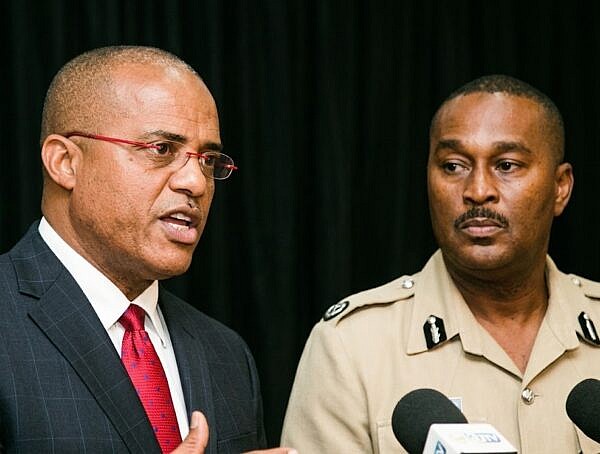
ACP CHASWELL HANNA & FNM MARVIN DAMES VISA REVOKED?
Dr Chaswell A. Hanna Assistant Commissioner of Police School-Based Policing & Training and Former Minister of National Security Marvin Dames …
An RPG Under A Stove — Police Baffled as Illegal Firearms Crackdown Takes Shocking Turn
Police in their quest to crack down on the proliferation of illegal firearms are baffled tonight. In what is perhaps the …