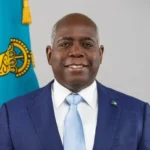



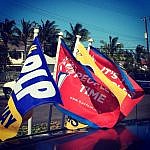



Choosing a dry dock to chart an entire island’s economic future carries a profound, poetic gravity. When Prime Minister Philip Davis stood inside a Freeport shipyard on October 21, 2026, he framed Grand Bahama’s state with unyielding clarity: for decades, we have patched a structurally compromised hull.
For seventy-one years, Grand Bahama has operated under a compromise born of another era. Signed in 1955, the Hawksbill Creek Agreement was a bold colonial experiment designed to turn a pine forest into an industrial engine. The private Grand Bahama Port Authority (GBPA) was handed the traditional apparatus of statehood: licensing, land planning, fee structures, and regulatory control. This arrangement was created eighteen years before Bahamian Independence, when ordinary Bahamians had no vote, no voice, and no seat at the table.
Today, that experiment has reached its natural, historical limit. Between 2010 and 2022, Grand Bahama lost nearly ten per cent of its population. Nearly one in five homes stands empty, mute testimonials to bright young Bahamians who boarded morning flights for Nassau or Florida, tired of waiting for boardroom decisions made by individuals who owe their primary allegiance to corporate balance sheets, not the public good.
The Prime Minister’s address delivered what Grand Bahama has needed for a generation: certainty. The era of status quo governance is over. The premise that a private entity can exercise public authority without democratic or fiscal accountability in a sovereign nation in 2026 is no longer up for discussion. Public power belongs to the public, exercised through the representatives they elect. Authority is a sacred public trust, not a negotiable private asset.
Yet true leadership balances bold reform with commercial realism. The administration’s new framework, “Grand Bahama: A Framework for Stability and Growth”—is a landmark policy because it does not seek to tear down private enterprise, but to restore its proper relationship with public duty.
The proposed Green Paper sets out a measured, lawful, and inclusive road ahead. The three pillars of this strategy demonstrate a sophisticated understanding of modern economic governance:
- A Grand Bahama Development Council: Giving local residents, business leaders, licensees, and youth a permanent, institutionalized voice to drive development and break Agency gridlock across the entire island.
- A Comprehensive Review of the Hawksbill Creek Agreement: Led by the Attorney General, this initiative will systematically separate private property rights from public administrative functions. Public safety, environmental protection, customs, and municipal oversight will return to transparent public regulation, while respecting lawfully acquired private property and contractual rights.
- A Modern Legislative Framework: Through a Grand Bahama Development Act, economic incentives and island-wide concessions will extend beyond the Port Area into East and West Grand Bahama, uniting the island into a single, cohesive economic system.
Crucially, this transition does not alienate institutional partners or investors. Private capital requires stability, predictable laws, and modern infrastructure. Major anchor developments currently underway- the $400 million MSC cruise terminal expansion, the redevelopment of the Grand Lucayan, the resilient redesign of the international airport, and the Freeport Health Campus- prove that private enterprise and public stewardship can thrive side by side when boundaries are clearly drawn. The Port Authority itself is invited to sit at the table and become what it was always meant to be: a premier commercial developer, investor, and landholder, not an unelected municipal proxy government.
Opponents of reform will inevitably raise the spectre of uncertainty. But true uncertainty is asking a child born in Freeport today to wait until the Hawksbill Creek Agreement expires in 2054, when she will be twenty-eight years old, to see her hometown governed by the same democratic standards as Nassau, Abaco, or Cat Island. True uncertainty is leaving an island’s fate anchored to a colonial relic.
The administration has outlined an open, six-month consultation process that will culminate in a White Paper by July 2027 and legislation in early 2028. This is not a rushed mandate imposed from above; it is an invitation to every Grand Bahamian, licensee, and investor to shape the final architecture of their home.
Independence cannot stop at the Port Area’s borders. The work that began in 1973 remains incomplete as long as any part of our Commonwealth operates outside the sovereign, democratic will of the Bahamian people. Grand Bahama is no longer waiting for a calendar to set it free. We have brought the ship into dry dock, and together, we are building a hull strong enough to carry our children into a proud, self-determined future.
More from LOCAL
The FNM Has Dug a Hole So Deep, It May No Longer See Daylight
By refusing to confront its leadership crisis, alienating its supporters, and letting personal ambitions overshadow party unity, the Free National …

VJ Edgecombe’s Patriotism Deserves Praise, Not Criticism
An Opinion by a Proud Bahamian There is something deeply inspiring about a young Bahamian athlete who understands that representing his …
ACP CHASWELL HANNA & FNM MARVIN DAMES VISA REVOKED?
Dr Chaswell A. Hanna Assistant Commissioner of Police School-Based Policing & Training and Former Minister of National Security Marvin Dames …