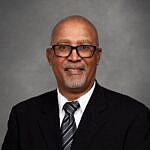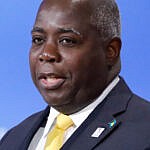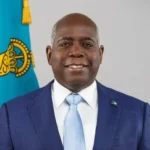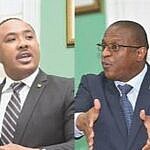







There is nothing accidental about the connection many Bahamians feel when they encounter Philip Davis. It is not manufactured, not rehearsed, and certainly not borrowed from a consultant’s playbook. It is rooted in something far more enduring: authenticity forged through experience. In a political age where image is often mistaken for substance, Davis stands apart precisely because he has never pretended to be anything other than who he is.
It is no secret what has shaped him. Long before the titles, before he became a King’s Counsel and argued before the highest courts, he was simply “Brave”—a man navigating life without the privileges that so often define access in our society. He did not rise from elite corridors or inherit influence. Instead, he built his reputation step by step, case by case, person by person. And that journey matters, because it explains why he is as comfortable in the boardroom as he is at the roadside stand, why he can speak in the halls of the legal fraternity one day and be among the “least of these” the next without missing a beat.
This is not political theatre. It is a lived reality.
Davis never had the luxury of turning up his nose at anyone. He knows what it means to be overlooked, underestimated, and dismissed for not fitting the traditional mould of success. And perhaps that is why his leadership resonates so deeply. He does not “visit” the people—he belongs among them. He can walk into any gathering, any “watering hole,” and engage without pretence because he is not performing; he is connecting.
Critics may scoff at this quality, mistaking humility for weakness. But they misunderstand what they are witnessing. This is not a man shrinking to fit the room. This is a man who has mastered every room he enters—whether it is a courtroom before distinguished jurists or a neighbourhood gathering filled with ordinary Bahamians. He has already proven himself at the highest levels of legal excellence, winning before the most prestigious courts in the world. Yet he has never lost the ability—or the desire—to “reach out and touch” the everyday citizen.
That is the essence of a man: not simply one who excels in multiple arenas, but one who remains grounded despite those achievements.
And so, as the nation approaches another defining election, the choice before us becomes starkly clear. This is no longer about slogans or fleeting moments on a campaign stage. It is about leadership—real leadership. Who will captain the ship of state through uncertain waters?
Do we entrust our future to a steady hand, or do we gamble on unpredictability?
Because leadership is not entertainment. The Bahamas is not a stage, and its people are not an audience waiting to be amused. The role of prime minister is not for someone auditioning for applause, crafting lines for laughter, or chasing validation from a crowd. It requires discipline, judgment, and a seriousness of purpose that cannot be faked.
When we examine the alternative, including figures like Michael Pintard, the contrast becomes even sharper. Leadership is not learned overnight, nor is it developed in the absence of real-world responsibility. It is built through decision-making under pressure, through accountability, through experience that tests both character and competence.
The Bahamas cannot afford experimentation at this level.
We are living in serious times—economically, socially, and globally. The challenges we face demand a leader who will not blink under pressure, who will not defer critical decisions to external interests, and who will not genuflect to powerful entities like the Grand Bahama Port Authority or retreat to enclaves such as Lyford Cay seeking direction from wealthy influencers like Brent Symonette. This country requires independence of mind and firmness of will.
That is the fundamental question: do we want a leader who governs, or one who performs?
Philip Davis has shown, time and again, that he is not a clown. He is not driven by applause or distracted by spectacle. He is a man of his word—something increasingly rare in modern politics. And because of that consistency, Bahamians have come to respect him. More importantly, they have come to trust him.
Trust is not given lightly. It is earned through years of reliability, through decisions that reflect principle rather than convenience. And it is sustained when a leader remains the same person in public office as he was before entering it.
This election, then, is not complicated. It is not about personality clashes or campaign theatrics. It is about choosing the kind of leadership that reflects the seriousness of our moment.
Do we choose experience or inexperience? Substance or spectacle? Stability or gamble?
The answer will determine not just the next five years, but the trajectory of the nation itself.
Because in times like these, the Bahamas does not need an apprentice. It needs a steady, serious man at the helm.
More from LOCAL
AGAINST ALL ODDS: SENATOR KENO WONG HITS A HOME RUN ON THE INTERNATIONAL STAGE
Life has a way of throwing curveballs. Some people face one strike, others two, and some find themselves standing at …
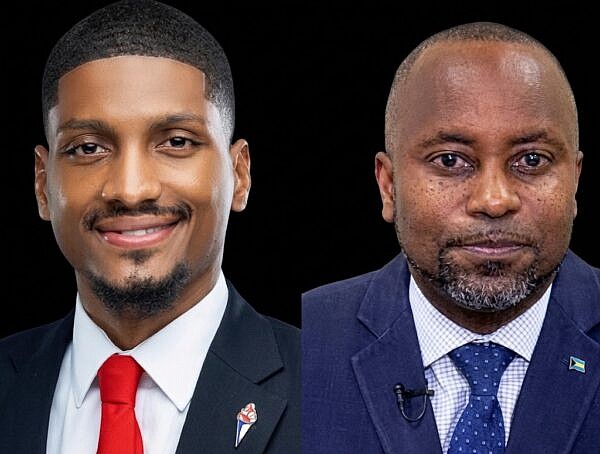
FNM CONCLAVE: REVIVAL OR POLITICAL FRATERNIZATION?
THE FNM IS IN QUICKSAND, the more they wiggle, the deeper they sink. The Free National Movement (FNM) is in such …
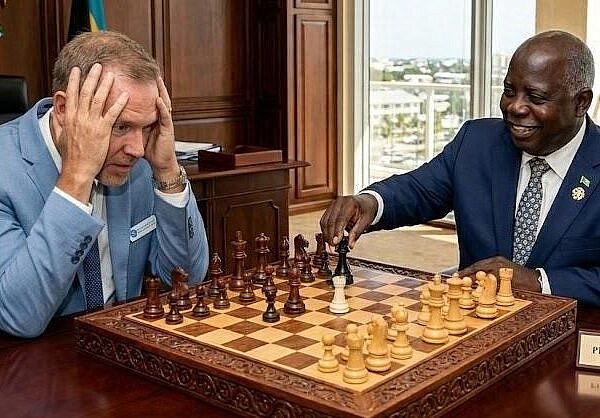
FREEPORT’S FUTURE AT RISK: IS THERE A HIDDEN AGENDA TO STRIP THE GBPA OF ITS ASSETS?
By Bahamas Herald | Opinion FREEPORT, GRAND BAHAMA — Something appears to be stirring behind the walls of the Grand Bahama …