






The Herald points to a troubling and consistent pattern that unfolded across multiple polling stations during Thursday’s Advanced Poll. Voters reported unusually slow processing times, long lines that barely moved, and a general sense of disorganization that strained both patience and confidence. While high turnout and limited polling locations can naturally create bottlenecks, what stands out here is the uniformity of the problem. When inefficiency looks the same everywhere, it raises a legitimate question: Is this a mere coincidence or something more coordinated?
Let’s be clear, no reasonable observer is placing blame on the ordinary election workers who stepped forward to serve. These individuals often operate under pressure, with long hours and limited resources, and they deserve credit for their willingness to participate in the democratic process. But acknowledging their effort does not mean ignoring the larger systemic issue. The real question lies beyond individual performance and instead points toward the structure and management of the process itself.
Could this have been a deliberate slowing of the system? It’s not an outrageous question. In fact, it’s one that responsible citizens should feel obligated to ask when irregularities appear widespread and patterned. The civil service, from which many polling staff are drawn, has long carried a reputation, fairly or unfairly, for bureaucratic sluggishness. Critics have often argued that processes can be delayed, sometimes intentionally, as a form of quiet resistance or control. When such a culture intersects with something as critical as an election, the consequences can be significant.
Layer on top of that the current political climate. It is no secret that not everyone within the public sector aligns with the present administration. Political preferences exist in every profession, and civil servants are no exception. That reality alone does not imply wrongdoing, but it does mean the system must be designed to guard against even the perception of bias. When voters begin to wonder whether delays are being used as a tool—whether to frustrate turnout or cast doubt on the process, confidence erodes.
And that is perhaps the most dangerous outcome of all. Elections do not only depend on fairness; they depend on the belief in fairness. Once that belief is shaken, even slightly, it opens the door to narratives that can spiral far beyond the facts on the ground.
There is also a broader strategic context to consider. Around the world, and particularly in the United States, we have seen how claims of dysfunction, real or exaggerated, can be weaponized. Allegations of voter suppression, interference, and systemic failure have become central talking points in modern political playbooks. It would be naive to think that such strategies are confined to one country. Political actors study each other. Tactics travel.
So when similar themes begin to surface locally, slow processes, frustrated voters, whispers of irregularity—it is not unreasonable for people to draw parallels. The concern is not just about what happened on Thursday, but also about how it might be used afterwards. Was the slowdown simply poor planning? Or does it feed into a larger narrative that “something is wrong” with the system?
None of this is proof of coordinated interference. But it is enough to demand answers.
At a minimum, there must be a thorough, transparent review of the Advanced Poll process. Data should be examined: processing times, staffing levels, and voter output at each station. If inefficiencies are found, they must be corrected immediately. If patterns suggest something more deliberate, then accountability must follow.
Democracy cannot afford ambiguity. It cannot function properly when voters leave polling stations more frustrated than confident. Whether the issue is incompetence, under-resourcing, or something more calculated, the response must be swift and decisive.
Because in the end, the real threat is not just a slow line, it’s a slow erosion of trust.
More from LOCAL
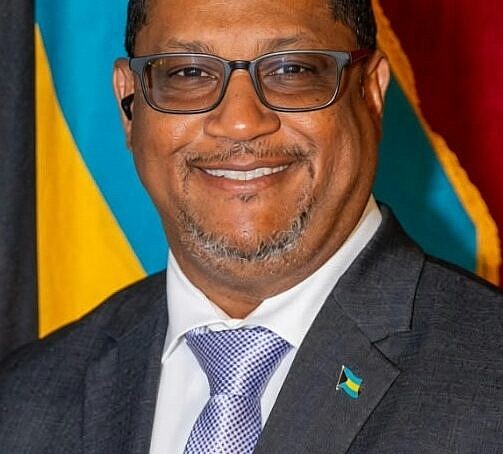
AGAINST ALL ODDS: SENATOR KENO WONG HITS A HOME RUN ON THE INTERNATIONAL STAGE
Life has a way of throwing curveballs. Some people face one strike, others two, and some find themselves standing at …
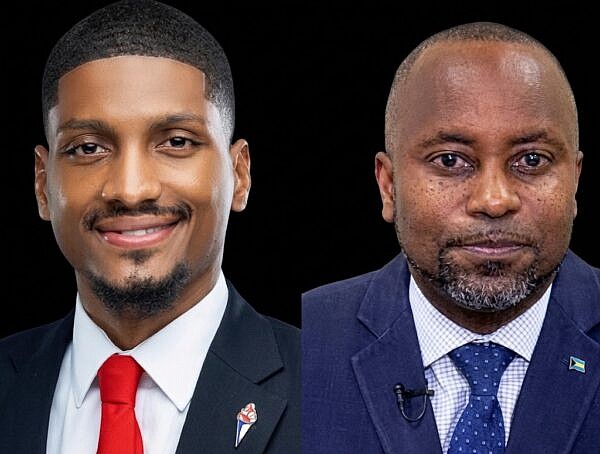
FNM CONCLAVE: REVIVAL OR POLITICAL FRATERNIZATION?
THE FNM IS IN QUICKSAND, the more they wiggle, the deeper they sink. The Free National Movement (FNM) is in such …
FREEPORT’S FUTURE AT RISK: IS THERE A HIDDEN AGENDA TO STRIP THE GBPA OF ITS ASSETS?
By Bahamas Herald | Opinion FREEPORT, GRAND BAHAMA — Something appears to be stirring behind the walls of the Grand Bahama …