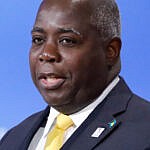









The unfolding controversy surrounding the alleged unauthorized disbursement of nearly one million dollars from Bahamas Power and Light (BPL) has taken an intriguing turn. Rather than standing alone to absorb the blame, BPL Union President Kyle Wilson appears to be arguing that the transaction was anything but a one-man operation. By pointing to those who signed, approved, and processed the documents authorizing the payments, Wilson has effectively raised a question that deserves serious consideration: Could a transaction of this magnitude have occurred without multiple layers of approval?
That is a fair question. Large public corporations do not typically operate on the whims of a single individual. They are governed by policies, financial controls, approval chains, internal audits, and oversight mechanisms specifically designed to prevent unauthorized expenditures. When hundreds of thousands of dollars—or in this case, close to a million dollars—leave an organization’s accounts, there is usually a trail of documents, signatures, and electronic approvals.
If Wilson’s assertions are accurate, then the investigation cannot stop with him. It must follow every signature, every approval, every recommendation, and every transfer of authority. The public deserves to know who prepared the documents, who verified them, who authorized them, and who ultimately released the funds.
That is not to suggest that everyone involved is guilty of wrongdoing. Signatures alone do not establish criminal intent. Some officials may have acted in good faith, relying on representations made by others. Others may have failed to exercise proper diligence. Still others may bear no responsibility at all. Those are precisely the facts an independent investigation must uncover.
The greater concern is whether the system itself failed. If BPL’s internal controls allowed such a substantial amount of money to be paid without adequate scrutiny, then the issue extends beyond individual accountability. It becomes a question of institutional governance. Checks and balances exist for a reason. They are intended to ensure that no single person can authorize, process, approve, and execute significant financial transactions without meaningful oversight.
Wilson’s public finger-pointing may strike some as an attempt to spread responsibility. Others may see it as exposing a broader culture of administrative complacency. Either way, his allegations cannot simply be dismissed. They should be tested against documentary evidence, financial records, approval logs, and witness testimony.
The temptation will be to rush to judgment, particularly in the court of public opinion. That would be a mistake. The public interest is not served by speculation or selective accountability. It is served by a thorough, transparent, and impartial investigation that follows the evidence wherever it leads.
Veteran journalist Jack Webb made famous the line, “Only the facts, ma’am.” That sentiment remains as relevant today as ever. In the BPL affair, personalities and politics should take a back seat to evidence. If this was indeed a collaborative failure, then every person who knowingly enabled it must answer for their role. If not, the facts should clear those who acted properly.
In the end, accountability should rest not on accusations, but on one simple principle: only the facts, baby, only the facts.
More from LOCAL

AGAINST ALL ODDS: SENATOR KENO WONG HITS A HOME RUN ON THE INTERNATIONAL STAGE
Life has a way of throwing curveballs. Some people face one strike, others two, and some find themselves standing at …

FNM CONCLAVE: REVIVAL OR POLITICAL FRATERNIZATION?
THE FNM IS IN QUICKSAND, the more they wiggle, the deeper they sink. The Free National Movement (FNM) is in such …
FREEPORT’S FUTURE AT RISK: IS THERE A HIDDEN AGENDA TO STRIP THE GBPA OF ITS ASSETS?
By Bahamas Herald | Opinion FREEPORT, GRAND BAHAMA — Something appears to be stirring behind the walls of the Grand Bahama …