






There is an old saying that justice must not only be done—it must also be seen to be done. Right now, at Bahamas Power & Light (BPL), the public is seeing something entirely different. It is seeing confusion, inconsistency and what appears to be selective accountability.
Almost one million dollars allegedly found its way into someone’s account. That is not an accounting error that disappears under a stack of invoices. Money of that magnitude does not move itself. It requires authorization. It requires approvals. It requires signatures. It requires someone entrusted with authority to say, “Yes, pay it.”
That simple fact raises the question the public continues to ask: who approved it?
Yet while Bahamians wait for answers about how such an extraordinary payment could occur, the headlines have shifted to employee suspensions—specifically, suspensions with pay.
What exactly is the public supposed to make of that?
A suspension with pay is not a punishment. Nor should it be. In employment law and industrial relations, particularly where collective bargaining agreements exist, paid suspension serves a legitimate purpose. It protects the integrity of an investigation while preserving the rights of employees not found guilty of wrongdoing. It prevents interference with witnesses and documents while respecting the principle that allegations are not convictions.
There is wisdom in that approach.
But something equally important matters: consistency.
The moment suspensions appear selective, the public begins asking uncomfortable questions. If one person is suspended, why not another? If two employees are removed from the workplace while investigations proceed, why does a third remain in place despite being publicly connected to the same controversy?
Those questions are not attacks. They are questions of governance.
Reports indicate that Manager Melvin Babb and Senior Mechanical Technician Wellington Porter have been suspended. Porter, according to the Bahamas Electrical Workers Union, was suspended with pay for five days while allegations of gross misconduct are investigated. The Union has accepted that the Collective Bargaining Agreement permits investigative suspensions. It has not objected to due process. Instead, it has questioned timing, motive and whether retaliation is masquerading as procedure.
Those are serious allegations that deserve independent examination.
But another question hangs in the air with equal force.
Where is Kyle Wilson?
What exactly is Mr Wilson’s role in this affair?
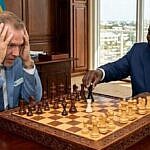
The public knows him largely through public statements and, according to persistent public criticism, through an image that has become almost symbolic—playing dominoes while reportedly collecting thousands of dollars weekly in overtime. Whether that characterization is entirely fair is beside the point. Perception matters in public institutions.
If Mr Wilson was senior enough to issue a public response to the Prime Minister through a press release, then the public is entitled to understand his responsibilities within BPL.
What is his job description?
What decisions fall within his authority?
Was he involved in approving expenditures?
Did he have oversight responsibilities connected to payroll, overtime or financial controls?
If investigators believe nothing requires his removal from the workplace, they should say so. Silence invites speculation.
Selective silence is dangerous because it creates the impression that different standards apply to different people.
That perception is precisely what public institutions should avoid.
The BEWU’s statement introduces another troubling dimension. The Union suggests that Porter’s suspension may distract from allegations involving an attempted bribe reportedly brought to management’s attention. If that is true, investigators must pursue those allegations with equal vigour. If it is not true, investigators should say so through transparent findings.
Either way, the public deserves clarity.
This is no longer merely an internal labour matter.
This concerns a public utility entrusted with millions of dollars belonging, directly or indirectly, to the Bahamian people. Every taxpayer and every electricity customer has an interest in knowing whether financial controls failed, whether approvals were abused and whether accountability reaches every level of the organization.
That is why suspension with pay should never become the story.
The story should be the investigation.
Paid suspension protects due process. It protects innocent employees from premature judgment. It protects employers from accusations of prejudging guilt. Those are worthwhile objectives.
But paid suspension also carries a public cost.
When the public sees individuals removed from duty while continuing to receive salaries, without understanding why some are suspended and others are not, confidence in the institution begins to erode. The issue is not the pay. The issue is whether the process appears fair.
Fairness demands consistency.
Consistency demands transparency.
Transparency demands answers.
Who approved the payment?
Who signed the authorization?
Who benefited?
Who knew?
Who is being investigated?
And perhaps the question that refuses to disappear: if multiple names continue to surface in connection with this controversy, why are only some employees suspended? In contrast, others continue carrying on as though nothing has happened?
These questions are not prejudgments of guilt. They are demands for accountability.
BPL’s Board and executive management now face a defining moment. They can either communicate openly, explain the rationale behind every investigative decision and restore public confidence, or they can continue allowing speculation to fill the vacuum left by silence.
Public trust is difficult to earn and astonishingly easy to lose.
In a scandal involving nearly one million dollars, mixed messages are almost as damaging as missing money.
The investigation should follow the evidence—not the politics, not personalities and certainly not public relations.
The Bahamian people deserve nothing less.


More from LOCAL
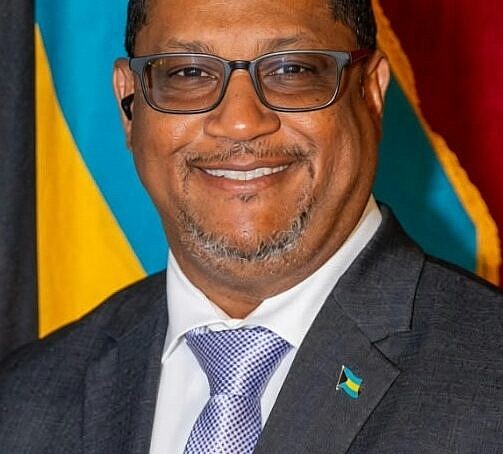
AGAINST ALL ODDS: SENATOR KENO WONG HITS A HOME RUN ON THE INTERNATIONAL STAGE
Life has a way of throwing curveballs. Some people face one strike, others two, and some find themselves standing at …

FNM CONCLAVE: REVIVAL OR POLITICAL FRATERNIZATION?
THE FNM IS IN QUICKSAND, the more they wiggle, the deeper they sink. The Free National Movement (FNM) is in such …
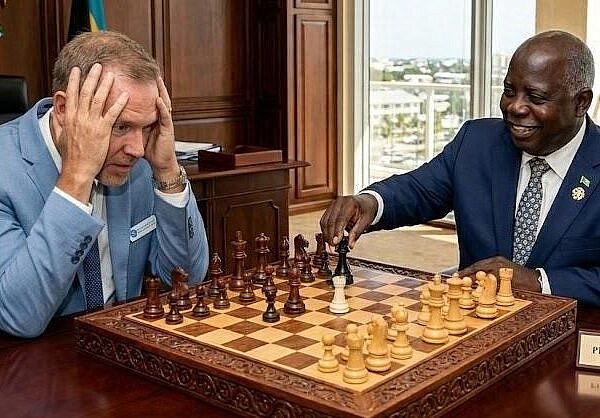
FREEPORT’S FUTURE AT RISK: IS THERE A HIDDEN AGENDA TO STRIP THE GBPA OF ITS ASSETS?
By Bahamas Herald | Opinion FREEPORT, GRAND BAHAMA — Something appears to be stirring behind the walls of the Grand Bahama …