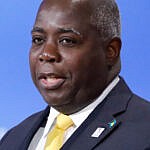









Leadership in the trade union movement demands more than passion and advocacy. It requires transparency, independence, and the confidence of the workers being represented. Those principles become increasingly difficult to uphold when a single individual holds multiple positions that overlap financially, professionally, and institutionally. That is why the many roles allegedly held by Obie Ferguson deserve careful public scrutiny.
To be clear, this is not an allegation of wrongdoing or illegality. Rather, it is about whether the concentration of influence in one individual creates actual or perceived conflicts of interest that undermine public confidence in the labour movement.
It is alleged that Ferguson serves as the lead negotiator for most, if not all, of the unions affiliated with the Trade Union Congress (TUC) during collective bargaining and contract negotiations. It is further alleged that he also acts as legal adviser to many of those same unions, representing them when labour disputes escalate into court proceedings. Those legal services, according to critics, are compensated separately by the unions involved.
At the same time, Ferguson serves as President of the TUC, the umbrella organization that receives affiliation fees from its member unions. While those fees are paid to the Congress rather than to Ferguson personally, he occupies the highest office within the organization that benefits from those contributions. Beyond those responsibilities, he also maintains a private practice as a King’s Counsel specializing in labour law.
Individually, none of these roles is necessarily improper. Combined, however, they present a legitimate governance question: Has too much influence become concentrated in one person?
The concern is not merely theoretical. When the same individual advises unions, negotiates on their behalf, litigates their disputes, and presides over the umbrella body representing those unions, it becomes increasingly difficult to separate institutional leadership from professional practice. Even if every decision is made with complete integrity, the appearance of overlapping interests can be just as damaging as an actual conflict.
Public institutions depend on confidence. Union members deserve to know that strategic decisions are being made solely in the interests of workers and not influenced—directly or indirectly—by professional relationships, financial incentives, or institutional loyalties. Transparency is not simply about avoiding misconduct; it is about ensuring that no reasonable observer has cause to question the leadership’s independence.
These concerns have gained greater prominence amid criticism from labour leaders such as Bahamas General Workers Union Acting Chairman Dave Beckford, who has accused Ferguson of contributing to division rather than unity within the labour movement. Whether those accusations are fair is ultimately for union members and the public to judge. Nevertheless, they underscore a broader issue: confidence in leadership is weakened when too much authority appears to rest with a single individual.
There is also the question of succession and institutional health. Healthy organizations cultivate diverse leadership, encourage independent voices, and distribute responsibility. When too many critical functions are concentrated in a single officeholder, organisations risk becoming overly dependent on a single personality rather than on strong governance structures.
Supporters will undoubtedly argue that Ferguson’s experience and expertise make him uniquely qualified to serve in these capacities. That may well be true. Experience, however, should never be used as an argument against accountability. In fact, the greater a leader’s influence, the greater the obligation to avoid circumstances that invite questions about impartiality or independence.
The labour movement has always demanded high ethical standards from employers, governments, and public officials. It is only reasonable that those same standards be applied within the movement itself. Workers deserve leaders who not only fight for fairness but also demonstrate it through governance that is transparent, accountable, and beyond reproach.
This debate is not about attacking one individual. Nor is it about diminishing decades of legal or labour advocacy. It is about protecting the credibility of institutions that represent thousands of Bahamian workers. Public trust is hard-earned and easily lost.
Perhaps the time has come for the Trade Union Congress and its affiliates to consider whether clearer governance policies are needed regarding overlapping leadership, legal representation, and professional engagements. Such reforms would protect not only the integrity of the institutions involved but also the reputations of those who lead them.
In the end, the issue is simple. When one man is alleged to negotiate contracts, advise unions, litigate their disputes, lead their umbrella organization, and simultaneously operate a private labour law practice, reasonable questions will inevitably arise. Those questions deserve answers—not because anyone has been proven to have acted improperly, but because strong institutions are built on openness, accountability, and the confidence of the people they serve.
More from LOCAL
AGAINST ALL ODDS: SENATOR KENO WONG HITS A HOME RUN ON THE INTERNATIONAL STAGE
Life has a way of throwing curveballs. Some people face one strike, others two, and some find themselves standing at …

FNM CONCLAVE: REVIVAL OR POLITICAL FRATERNIZATION?
THE FNM IS IN QUICKSAND, the more they wiggle, the deeper they sink. The Free National Movement (FNM) is in such …

FREEPORT’S FUTURE AT RISK: IS THERE A HIDDEN AGENDA TO STRIP THE GBPA OF ITS ASSETS?
By Bahamas Herald | Opinion FREEPORT, GRAND BAHAMA — Something appears to be stirring behind the walls of the Grand Bahama …