




The battle over Morgan’s Bluff is not merely about a port. It is about power, control, survival, and whether Bahamians will ever truly own the economic destiny of this country. For too long, the mystery surrounding Morgan’s Bluff has lingered like a shadow over our national development, whispered about in corridors of influence, quietly manipulated by those who understand exactly what control of trade means in a small island nation. The truth is uncomfortable, but it must be said plainly: this election may determine whether Bahamians remain economically independent or become permanently subservient to an entrenched oligarchy that already controls too much of the country’s commercial lifeline.
The stakes could not be higher.
For decades, Bahamians have watched a small group tighten their grip over commerce, shipping, imports, and distribution. The average citizen may not fully grasp how dangerous concentrated port control can be, but those at the top certainly do. Whoever controls the ports controls the movement of goods. Whoever controls the movement of goods controls prices, supply chains, businesses, livelihoods, and eventually politics itself. That is why Morgan’s Bluff matters so profoundly.
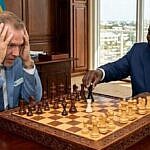
A vote that places Morgan’s Bluff within the reach of the UBP/FNM establishment is a vote that risks handing over the final piece of the economic chessboard to forces that already dominate Arawak Cay and influence Potters Cay. If Morgan’s Bluff falls into those same hands, then one bloc would effectively control the arteries of Bahamian commerce from north to south. That is not competition. That is economic captivity.
Hubert Ingraham’s decision to establish Arawak Cay and enforce the infamous twenty-one-mile restriction on competing ports effectively shackled New Providence for years. Everybody understood what it meant. It was designed to ensure that no serious commercial alternative could emerge within Nassau. That decision tied the hands of future governments and protected entrenched interests that have long profited from controlling imports and distribution.
But Morgan’s Bluff sits forty-one miles away.
That distance is more than geography. It represents opportunity. It represents the possibility of breaking an economic monopoly that has kept too many Bahamians dependent on a narrow circle of powerful interests. It represents leverage for ordinary Bahamians who are tired of seeing wealth concentrated into the same hands generation after generation while the majority struggle under rising food costs and shrinking opportunities.
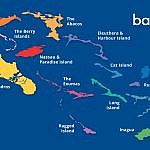
And make no mistake, there are people who want Morgan’s Bluff precisely because they understand its strategic importance. There are those who would gladly cut deals in Andros, pressure council members, and use political influence to secure control over the port, regardless of the long-term consequences for the Bahamian people. The pressure being placed on local decision-makers is not accidental. It is coordinated. It is deliberate. It is about securing economic dominance for generations to come.
Some may dismiss these concerns as political rhetoric. That would be a catastrophic mistake.
History has shown repeatedly that economic control eventually becomes political control. Once a small group dominates the supply chain of an entire nation, governments become vulnerable, citizens become dependent, and dissent becomes economically punishable. Prices can be manipulated. Access can be restricted. Entire industries can be squeezed into compliance. In a country as import-dependent as The Bahamas, port control is a matter of national power.
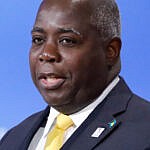
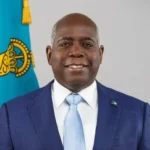
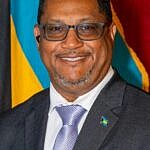
That is why Prime Minister Philip Brave Davis was correct to draw a line in the sand and make it clear that Morgan’s Bluff cannot be surrendered to oligarchic interests. This is bigger than party politics. This is about preserving a pathway toward genuine Bahamian empowerment.
The Progressive Liberal Party understands the historical significance of this fight because the PLP was born out of a struggle against economic and political domination. Sir Lynden Pindling and men like Clarence Bain did not fight merely for the right to vote. They fought to dismantle a system where a privileged minority controlled the economy while the majority remained locked out of ownership and opportunity. That battle did not end with Majority Rule. It simply evolved.
Today, the battlefield is economic infrastructure.
If Bahamians fail to recognise the significance of this election and allow greed, selfishness, or political bitterness to cloud judgment, then we may very well commit national economic suicide while “playing with our food.” The consequences would not be immediate, but they would be lasting. Once control is consolidated, reclaiming it becomes nearly impossible.
Morgan’s Bluff is more than a port. It is the gateway to economic independence. It is the chance to decentralize power, create new opportunities, and ensure that no single network can choke the nation’s supply chain. Losing it would mean surrendering one of the last opportunities for true Bahamian economic liberation.
This election is not simply about who forms the government. It is about who controls The Bahamas’ future.
More from LOCAL
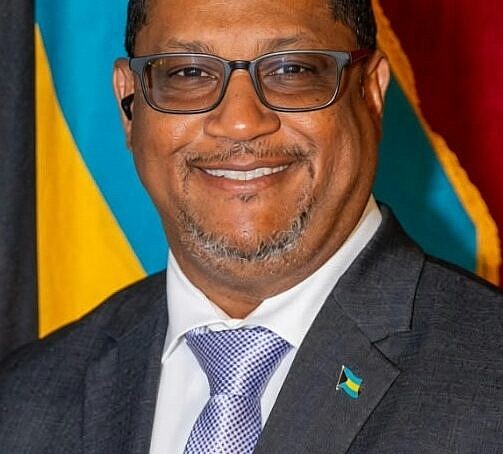
AGAINST ALL ODDS: SENATOR KENO WONG HITS A HOME RUN ON THE INTERNATIONAL STAGE
Life has a way of throwing curveballs. Some people face one strike, others two, and some find themselves standing at …

FNM CONCLAVE: REVIVAL OR POLITICAL FRATERNIZATION?
THE FNM IS IN QUICKSAND, the more they wiggle, the deeper they sink. The Free National Movement (FNM) is in such …
FREEPORT’S FUTURE AT RISK: IS THERE A HIDDEN AGENDA TO STRIP THE GBPA OF ITS ASSETS?
By Bahamas Herald | Opinion FREEPORT, GRAND BAHAMA — Something appears to be stirring behind the walls of the Grand Bahama …