





The greatest admission of defeat by the Free National Movement came not at the ballot box, but on the campaign trail itself. Last night’s desperate attempt to create momentum was not a show of strength; it was a flashing warning light that the engine had already failed. The reality is painfully obvious to everyone watching closely: the FNM is running on fumes because it ran out of gas long before this campaign even began.
For months, the signs were there. Rally after rally failed to ignite excitement. Crowds were sparse, energy was missing, and organizers resorted to carefully arranging venues to create the illusion of support. But no amount of camera angles, strategic staging, or loud rhetoric can manufacture enthusiasm where none exists. Bahamians simply were not interested in showing up in the numbers the FNM desperately needed.
Why? Because many of their own supporters have had enough.
The fracture within the party did not happen overnight. It was years in the making. The disrespect shown toward former Prime Minister Hubert Minnis alienated many staunch FNM supporters who believed that loyalty and service to the party still mattered. Whether people agreed with Minnis or not, many in the FNM base found his treatment humiliating and unnecessary. Once that internal war became public, the bleeding began.
Then came the mass exodus.
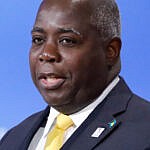
Long-time members, generals, and loyal foot soldiers quietly stepped away. Many who once defended the party through thick and thin simply stopped showing up. Others openly distanced themselves from the leadership direction under Michael Pintard. What made matters worse for Pintard was that he appeared to be fighting battles on every front at the same time. He scrambled to regain his footing, but one man cannot be everywhere all the time. The cracks became impossible to hide.
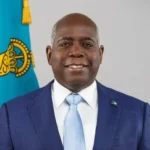
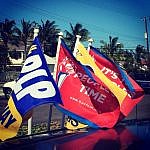
Even more telling was what happened with the party’s own campaign branding. In constituency after constituency, candidates appeared to distance themselves from Pintard. Their posters spoke volumes without saying a word. While the Progressive Liberal Party proudly featured Prime Minister Philip Davis front and centre, many FNM candidates seemed reluctant to attach themselves too closely to their own leader. That alone revealed the truth: internally, they knew Pintard was not resonating with the wider public.
The FNM complained endlessly about PLP posters carrying Davis’ image because they understood the contrast was devastating. The PLP projected leadership stability, while the FNM projected uncertainty and internal confusion.
Then came the ultimate act of desperation: trotting out former Prime Minister Hubert Ingraham in an effort to revive the party’s fading fortunes. But instead of energizing the country, the move only reinforced the perception that the FNM has run out of fresh ideas, leadership, and direction. Bahamians have seen this movie before.
The appearance of Ingraham also reopened old wounds and old questions that have never fully gone away. Many Bahamians still remember the controversy surrounding the sale of the Bahamas Telecommunications Company and continue to question who truly benefited from that transaction. The public also remembers the massive cost overruns associated with the Road Improvement Program, where estimates ballooned dramatically despite assurances that projections had already accounted for “worst-case scenarios.” To this day, many believe the Bahamian people never received satisfactory explanations.
That is why the FNM’s decision to rely on Ingraham carries political risks of its own. Instead of symbolizing renewal, it reminds voters of unresolved controversies and unanswered questions.
At the same time, many observers believe Ingraham’s political calculations are not entirely about helping Pintard succeed. Increasingly, there is speculation within political circles that powerful figures inside the party are already preparing for life after Pintard. The chatter surrounding Duane Sands as a possible future leader continues to grow louder. Whether true or not, the perception alone further weakens Pintard’s authority because it suggests that some within his own camp are already planning the next chapter.
And then there was Ingraham’s speech itself.
Many were stunned that he chose to attack businessman Sebas Bastian for achieving success, while saying little or nothing about The Eastern Road, Lyford Cay, the Grand Bahama Port Authority, and wealthy foreign interests that have profited from Bahamian resources for decades. To many listeners, the speech felt disconnected from the economic frustrations of ordinary Bahamians who are increasingly demanding greater local ownership, empowerment, and opportunity.
The bigger issue, however, is that the FNM appears trapped in the past while the country is demanding solutions for the future. Instead of presenting a compelling vision, the opposition has become consumed with internal warfare, personality clashes, and desperation tactics.
Politics is ultimately about energy, confidence, and belief. Right now, the FNM appears to have lost all three.
What Bahamians witnessed last night was not a movement rising to power. It was a party going through the motions, hoping nostalgia could substitute for momentum. But nostalgia cannot fuel a campaign that stalled before it even left the starting line.
The truth is simple: when a political organization has to rely on recycled faces, shrinking crowds, and internal damage control to survive, it is no longer driving the national conversation. It is struggling to remain relevant.
And that may be the clearest sign yet that the Bahamian people are ready to turn the page.
More from LOCAL
AGAINST ALL ODDS: SENATOR KENO WONG HITS A HOME RUN ON THE INTERNATIONAL STAGE
Life has a way of throwing curveballs. Some people face one strike, others two, and some find themselves standing at …
FNM CONCLAVE: REVIVAL OR POLITICAL FRATERNIZATION?
THE FNM IS IN QUICKSAND, the more they wiggle, the deeper they sink. The Free National Movement (FNM) is in such …
FREEPORT’S FUTURE AT RISK: IS THERE A HIDDEN AGENDA TO STRIP THE GBPA OF ITS ASSETS?
By Bahamas Herald | Opinion FREEPORT, GRAND BAHAMA — Something appears to be stirring behind the walls of the Grand Bahama …