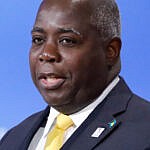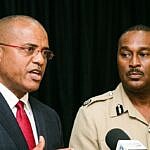







The storyline writes itself, but not in the way Duane Sands and Lincoln Bain might have hoped.
In the lead-up to the advance poll, both men struck a familiar chord—one that has echoed across many democracies in recent years: raise doubts about the process early, question the integrity of institutions, and, if the political winds shift unfavourably, fall back on allegations of irregularities. It is a well-worn script. But in The Bahamas, it has landed with a dull thud.
Their attempt to cast suspicion on the Parliamentary Registrar and the handling of ballot transfers was not just unconvincing—it was out of step with a public that has grown more discerning, more attentive, and less tolerant of political theatrics disguised as concern. The dramatic warnings, the insinuations of impropriety, the effort to paint routine electoral procedures as something sinister—all of it felt less like a defence of democracy and more like a pre-emptive excuse.
The problem with crying wolf is not simply that people may doubt you later; it is that they are watching closely in the moment. And what they saw during the transfer of ballot boxes was not chaos, but coordination. Not confusion, but clarity. Observers were present, procedures were followed, and the process unfolded without the catastrophe that had been loudly predicted.
That is where the narrative began to unravel.
Because once the spectacle failed to materialize, the pivot came—swift, quiet, and telling. Suddenly, the same process that was being cast as deeply flawed became, in the words of its critics, “orderly” and “flawless.” It is a remarkable reversal, and one that leaves more than a few observers asking: which version should the public believe?
This is not just a matter of inconsistency; it is a matter of credibility. When political figures oscillate between alarmism and acceptance depending on convenience, they risk eroding their own standing far more than they undermine any institution. The Bahamian people, far from being swayed, have largely rejected the narrative. They recognize the difference between legitimate scrutiny and manufactured outrage.
And that is the real story here—the quiet resilience of public confidence.
Yes, the advanced poll was not without its imperfections. There were delays. There were moments that required patience. But these were logistical challenges, not systemic failures. In any large-scale exercise involving thousands of voters, minor hiccups are inevitable. What matters is how those issues are addressed, and there is every indication that adjustments will be made moving forward.
What did not happen—despite the warnings—was any breakdown that would have justified the level of alarm raised.
There is an old saying: the more the monkey climbs, the more he exposes himself. It feels particularly apt in this moment. Because the higher the rhetoric climbed, the more exposed the gap between claim and reality became. Each exaggerated accusation only made the eventual calmness of the process more glaring.
Meanwhile, governance continues.
Parliament has not been derailed. The machinery of the state has not ground to a halt under the weight of these accusations. Legislative work goes on, policies continue to take shape, and the broader responsibilities of leadership remain in focus. The attempt to create a distraction has, in effect, failed.
And perhaps that is the most telling outcome of all.
Because at its core, this episode speaks to a deeper challenge facing those who rely on spectacle over substance. When the noise fades, what remains? What record is there to point to? What tangible achievements can be placed before the electorate?
These are questions that cannot be answered with press statements or social media posts. They require a track record—something measurable, something meaningful.
In its absence, the temptation to manufacture controversy can be strong. But as this episode demonstrates, it is a strategy with diminishing returns. The public is paying attention. They are weighing not just what is said, but how often it changes. They are looking not just for criticism, but for credibility.
And right now, credibility is in short supply.
That does not mean this is the end of the road for such tactics. Far from it. It would be naïve to assume that the rhetoric will suddenly soften or that new angles will not be pursued. Political contests are, by their nature, relentless.
But what has become clear is this: the Bahamian people are not buying what is being sold.
They have seen the warnings. They have witnessed the process. And they have drawn their own conclusions.
In the end, that may be the most powerful safeguard of all—not the absence of criticism, but the presence of a public that refuses to be misled by it.
More from LOCAL

AGAINST ALL ODDS: SENATOR KENO WONG HITS A HOME RUN ON THE INTERNATIONAL STAGE
Life has a way of throwing curveballs. Some people face one strike, others two, and some find themselves standing at …

FNM CONCLAVE: REVIVAL OR POLITICAL FRATERNIZATION?
THE FNM IS IN QUICKSAND, the more they wiggle, the deeper they sink. The Free National Movement (FNM) is in such …
FREEPORT’S FUTURE AT RISK: IS THERE A HIDDEN AGENDA TO STRIP THE GBPA OF ITS ASSETS?
By Bahamas Herald | Opinion FREEPORT, GRAND BAHAMA — Something appears to be stirring behind the walls of the Grand Bahama …